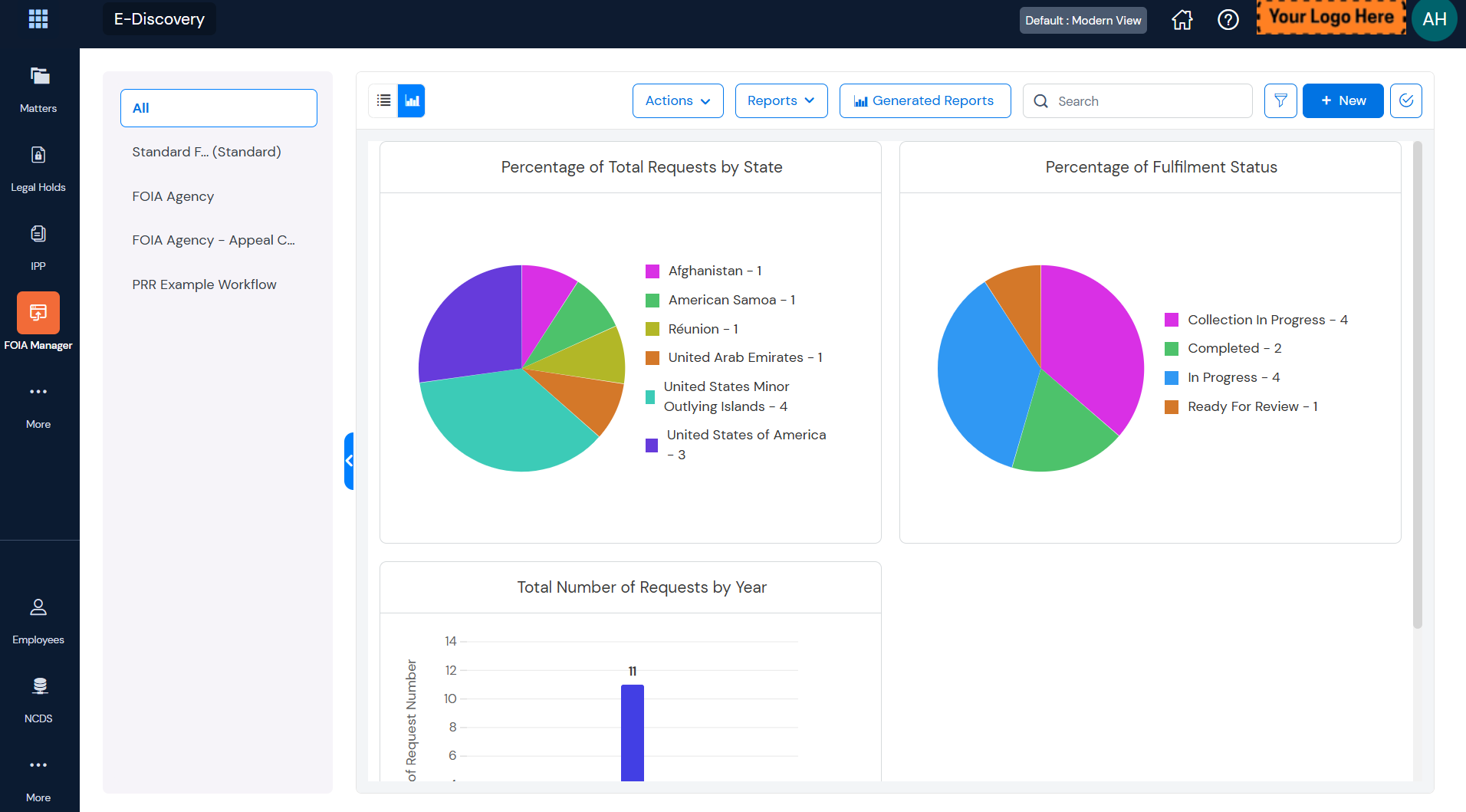
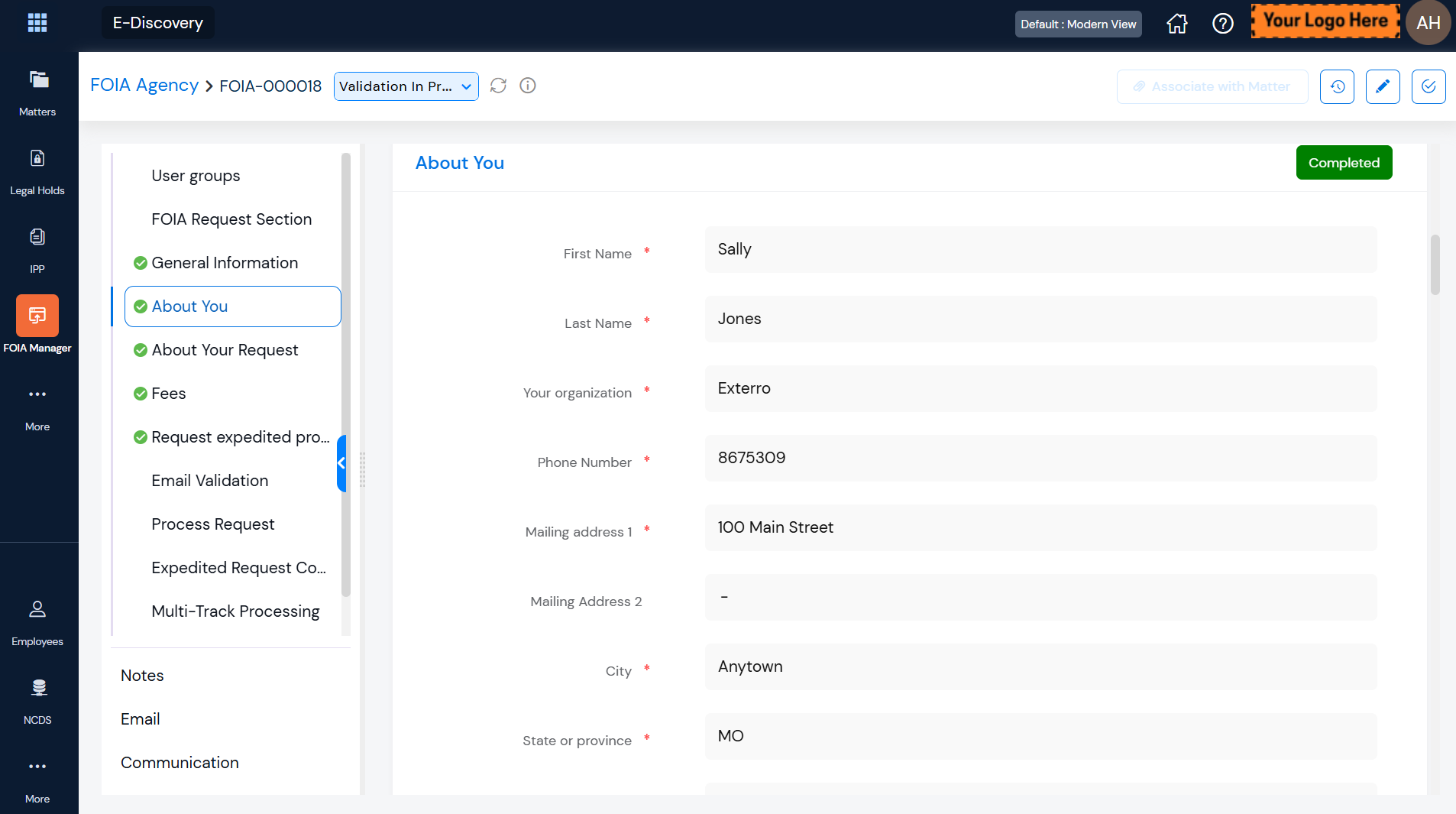
Exterro makes Freedom of Information Act (FOIA) and public records requests a breeze with automated workflows that include searching, collecting, reviewing, and producing requested documents.


With Exterro’s integrated data risk management platform, you know where your data lives and who has access to it, so you can confidently find what you’re looking for and stay ahead of deadlines.

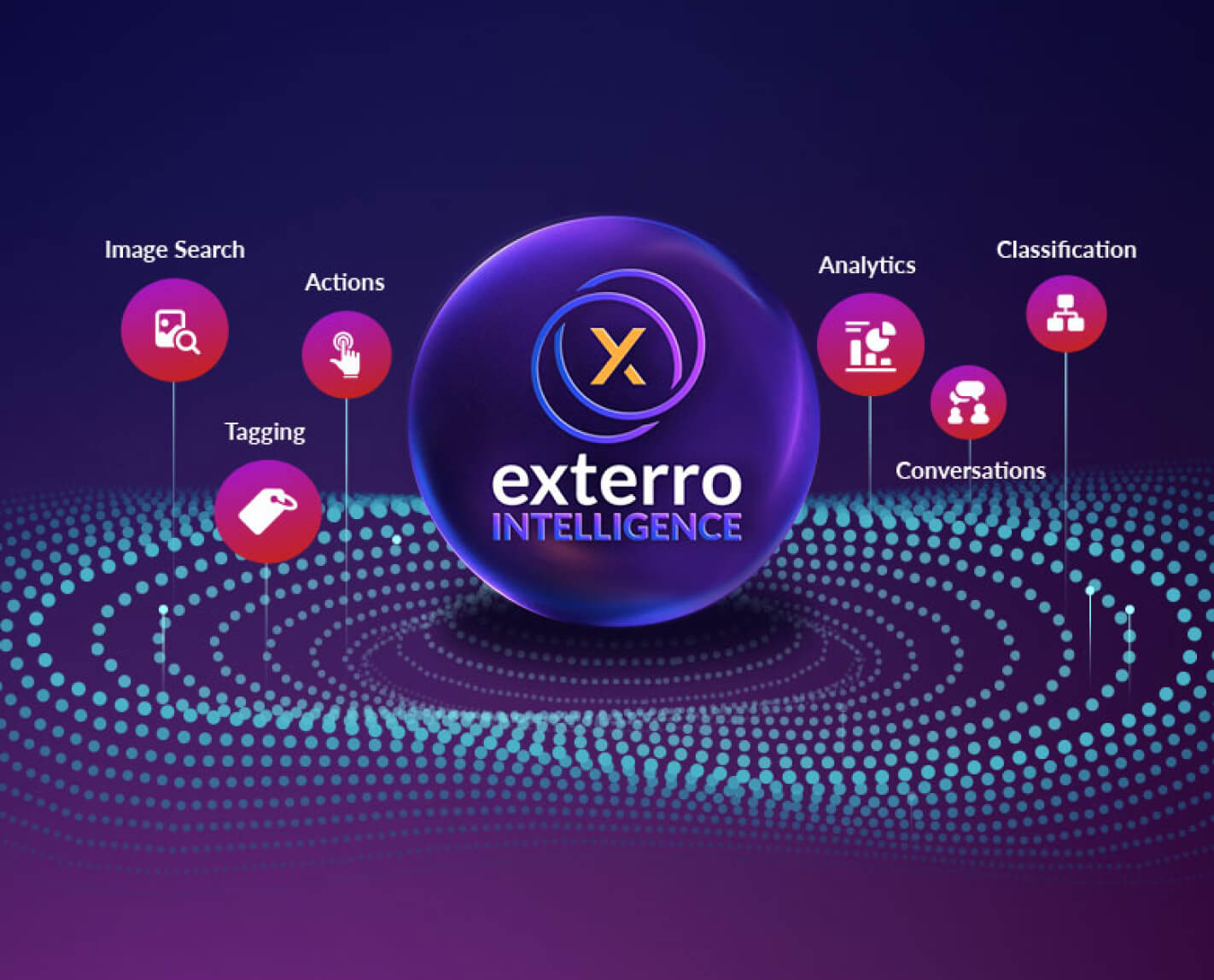
Exterro Intelligence enables you to quickly identify potentially responsive data both pre- and post-collection by exposing contextual relationships between custodians and content. Save time and have confidence in your search results by surfacing documents that may have been missed by traditional manual searching and filtering.

Collecting data is often the most time consuming and expensive part of responding to FOIA and records requests. Why collect more than you need? With Exterro, you can search and cull data sets using comprehensive filters before collection, saving hours of collection, processing, and review time.

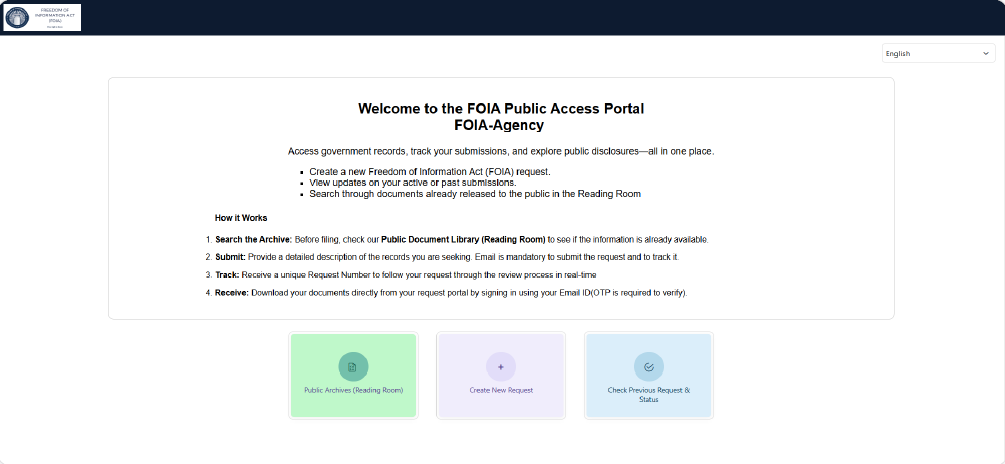
Exterro’s Constituent Portal keeps track of request submissions and progress. Get consistent information for each request and avoid redundant requests through access to an online library of public documents.

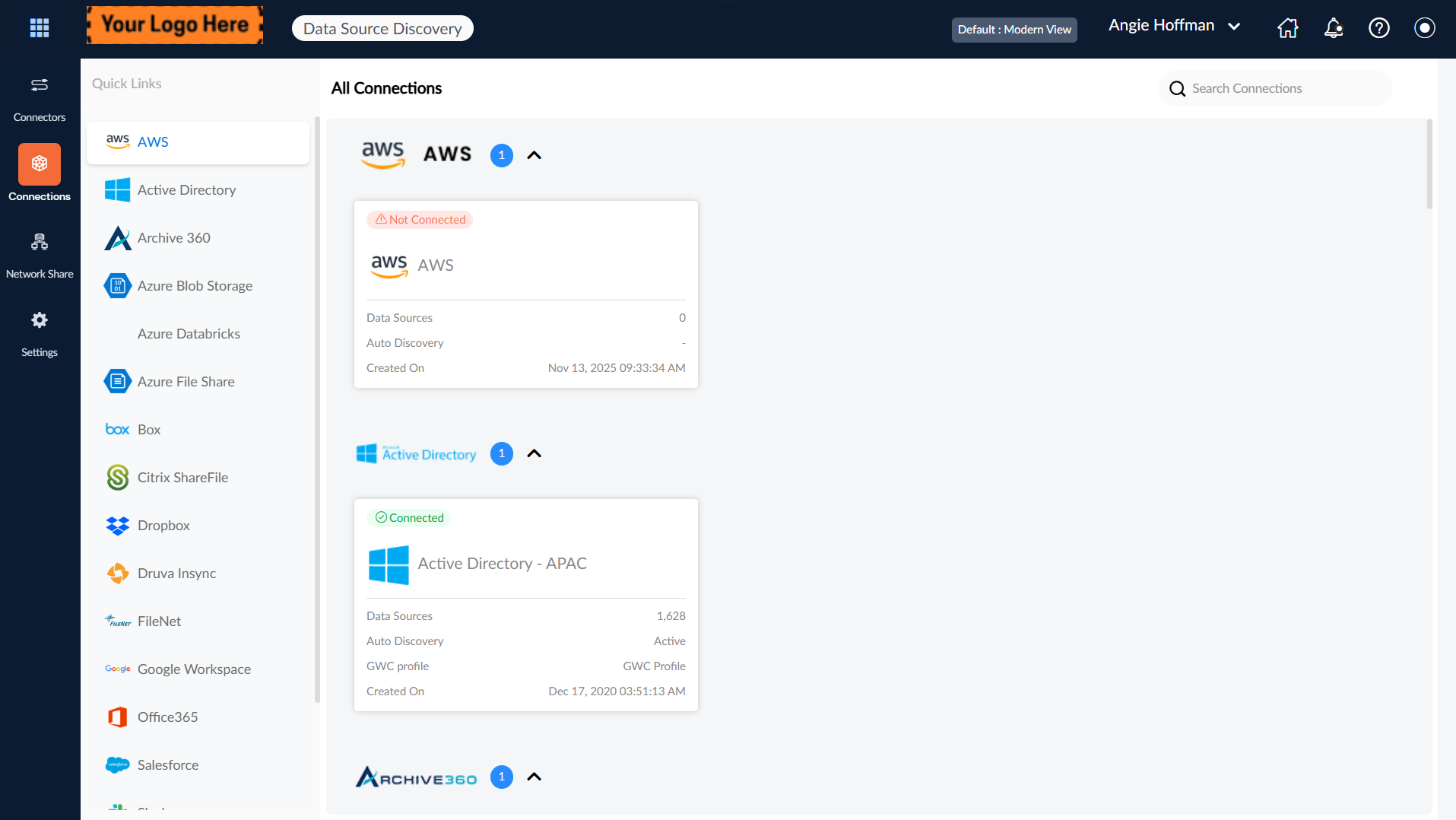
With 190+ native connectors to enterprise data sources across email, cloud storage, and collaboration platforms, Exterro delivers secure, direct and deeper access to more enterprise data sources than any other solution.
.png)
Exterro's ironclad commitment to securing data has earned us ISO 27001, SOC II, FedRAMP, TISAX, and HiTrust certifications.
Everything you need to know about Exterro FOIA and Public Records Response in one place
It features an integrated Constituent Portal with a searchable public document library. Requesters can access previously released records instantly, cutting your inbound request volume and eliminating repetitive work before it hits your queue.
Corporate tools aren't built for statutory public disclosure deadlines or citizen intake portals. Exterro is a purpose-built platform that unites public intake, live searching, AI redaction, and multi-step agency approvals in one continuous, defensible workflow.
Traditional public records collections force IT to manually extract data from legacy archives or email servers. Exterro uses 190+ pre-built native connectors to instantly search and cull files across your entire infrastructure without IT intervention.
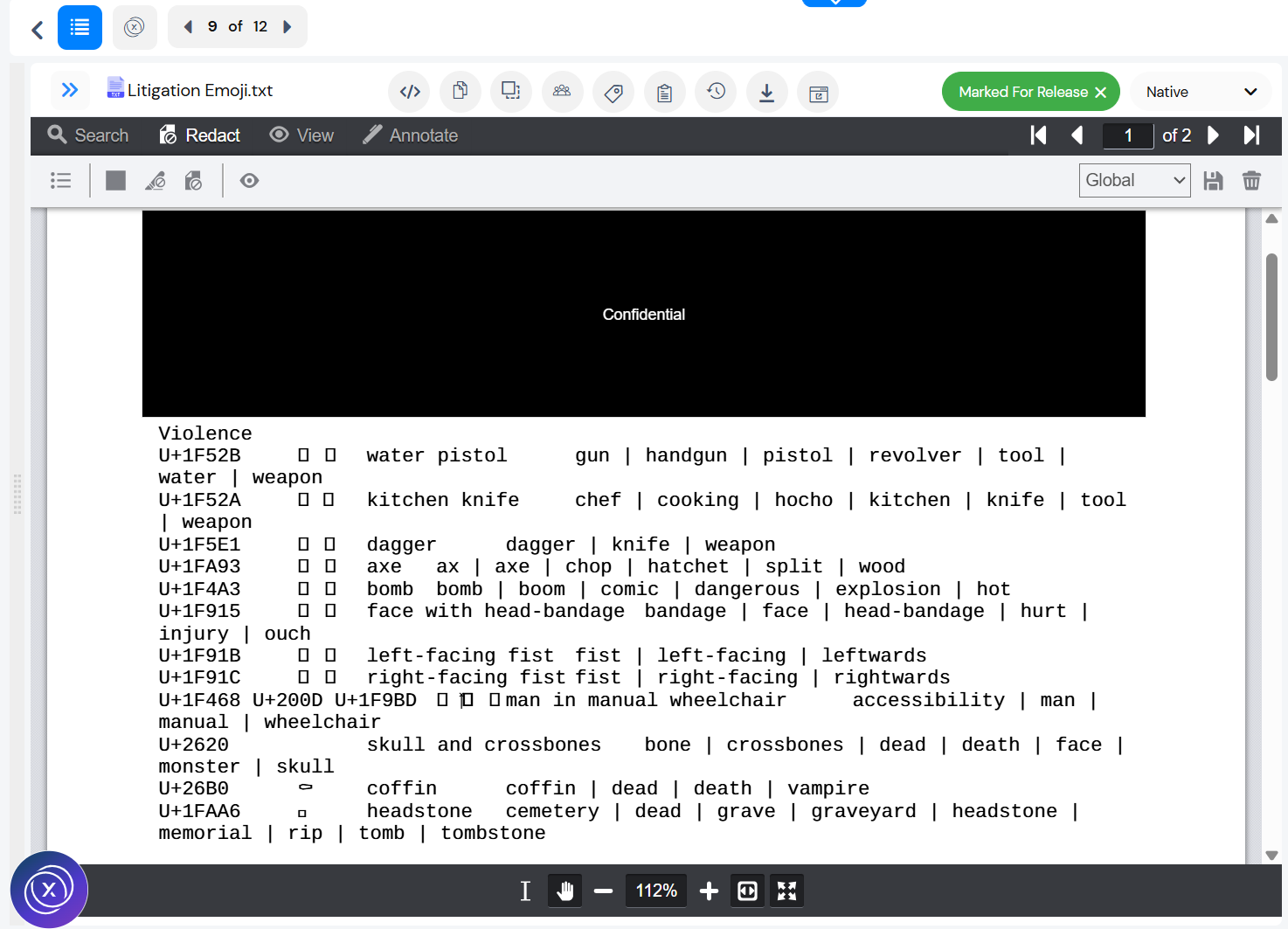
Yes. Driven by Exterro Intelligence, our AI automatically scans, classifies, and applies bulk redactions to PII, HIPAA, or CJIS-exempt data. It even remembers prior redactions on identical documents, slashing manual review times by up to 95%.
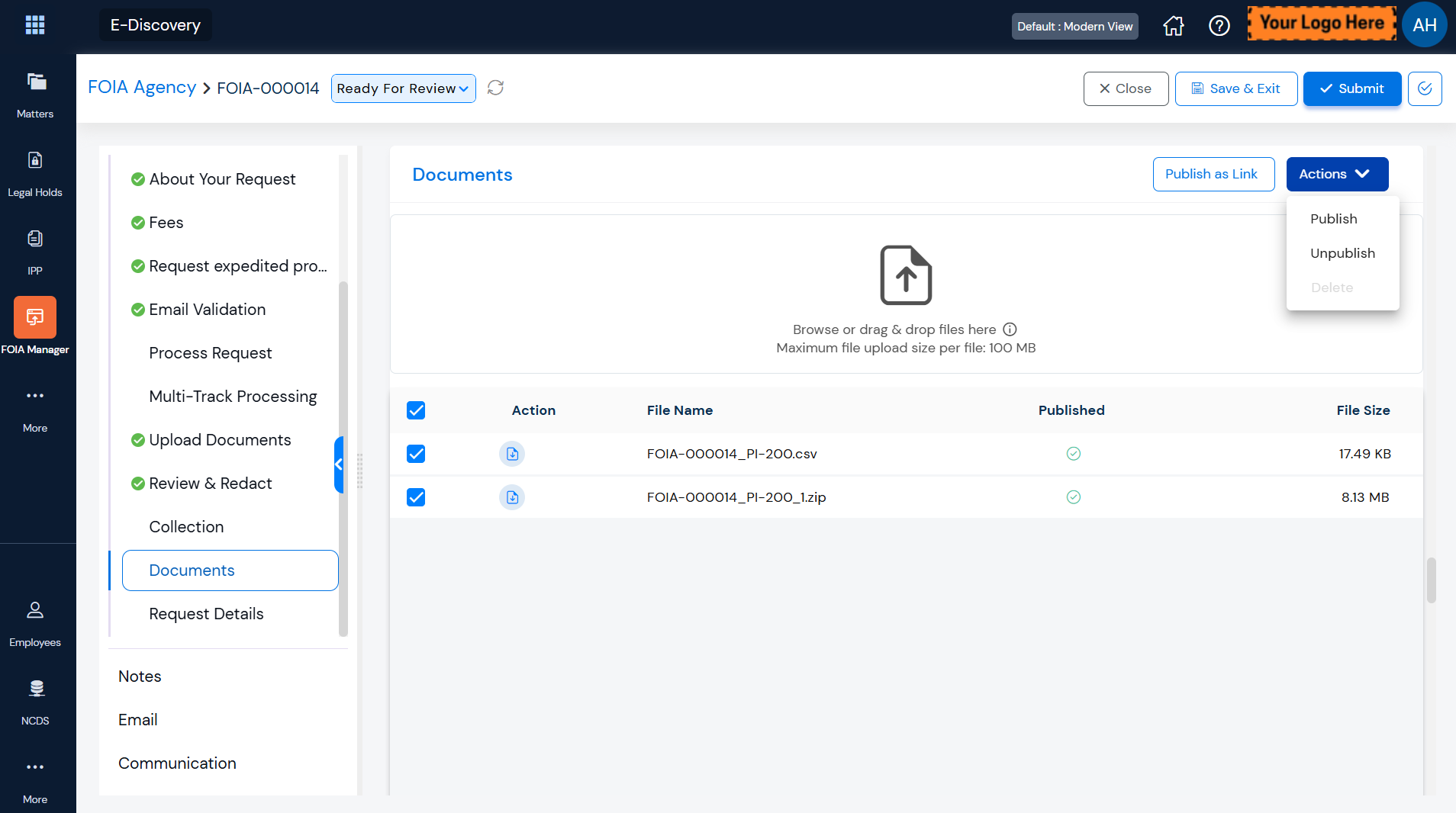
Exterro automates the clock. It ingests requests, logs statutory deadlines, routes tasks, and tracks metrics automatically. By replacing slow manual handoffs with automated workflows, teams process complex data inquiries up to 400x faster than traditional manual setups.
Absolutely. Public sector compliance requires ironclad security. Exterro’s data risk management platform is built on a privacy-by-design framework certified under FedRAMP, HITRUST, and ISO 27001, ensuring total protection across your entire infrastructure.
The platform generates an unalterable, comprehensive compliance audit trail automatically. Every search query, exemption application, and approval step is meticulously logged, giving your agency an air-tight, defensible record that satisfies statutory disclosure laws.
See how Exterro can help you manage your FOIA and public records requests more effectively.
Learn more about how to effectively respond to FOIA and records requests and how Exterro is helping public sector organizations manage data risk.

Download this product brief to learn how Exterro Data Management is built for streamlining activities around FOIA and public records requests.

Download this infographic to learn about the challenges government agencies are facing with increasing FOIA demands and how technology can help overcome them.

Learn how government agencies can manage the increasing challenges around data management in this whitepaper from the Center for Digital Government.