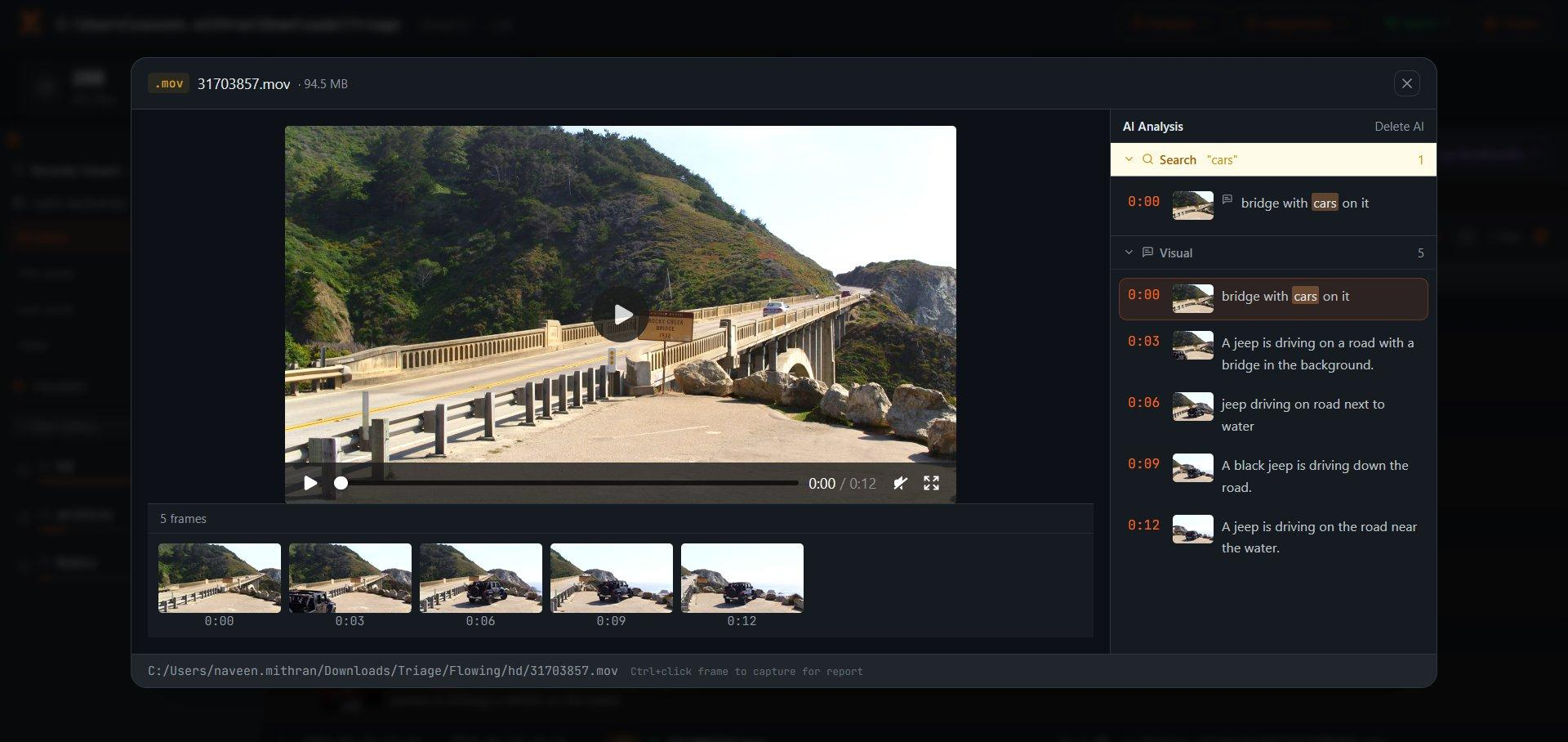
Exterro ARMOURop is an on-premises, AI-powered forensic investigation solution for evidence loaded into the examiner’s ontrolled environment. The examiner defines the objective, AI plans the supported workflow, Exterro’s proprietary forensic code performs the authorized analysis,
and the examiner validates the findings and determines what the evidence supports.


ARMOURop changes where forensic investigations begin. Instead of manually selecting and sequencing individual functions, examiners start with what the case must establish. ARMOURop then helps surface, connect, and organize relevant findings across the evidence so examiners can focus on interpretation, validation, and case decisions.

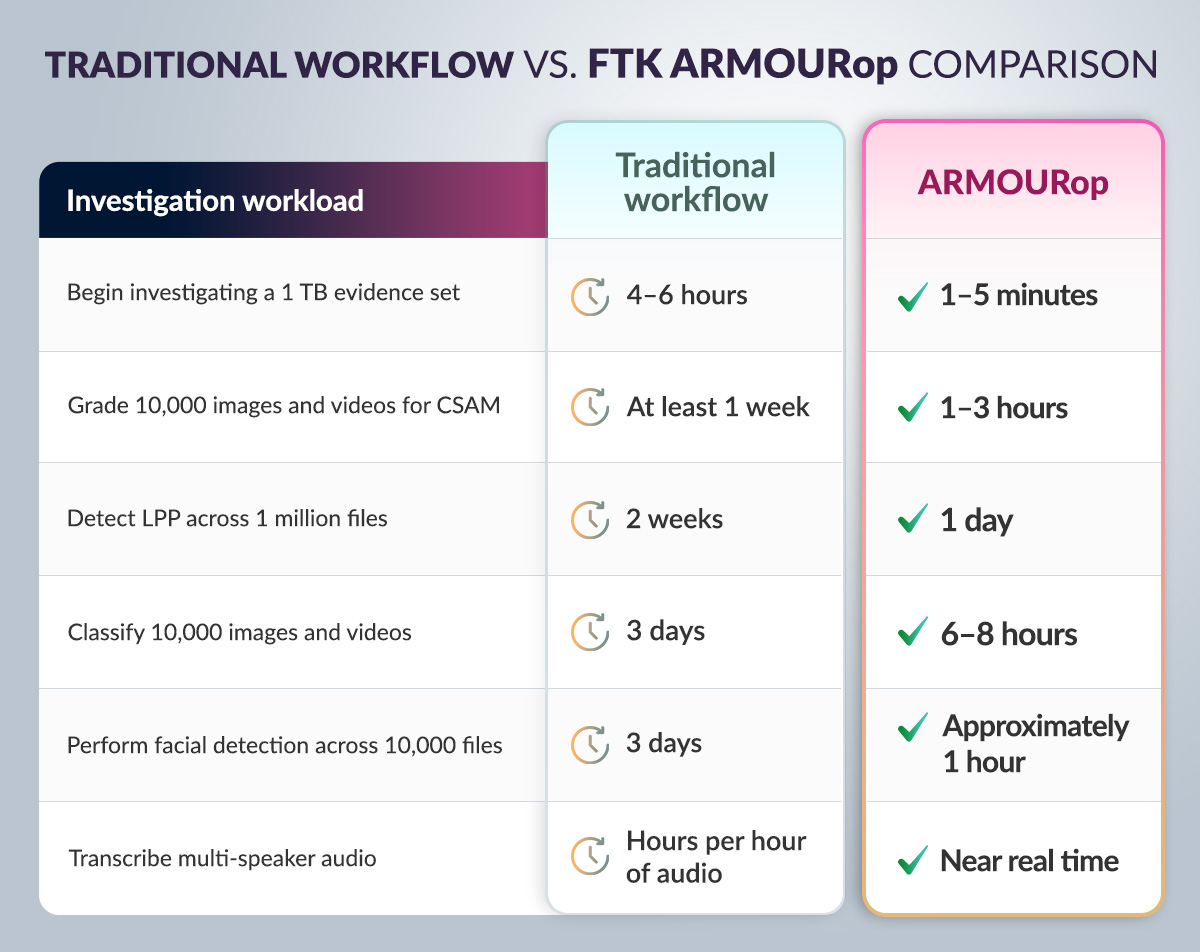
Representative investigation workloads demonstrate how ARMOURop can help examiners begin working sooner, reduce repetitive review, and reach case-relevant evidence faster.
See how an examiner defines the investigative objective, how AI plans the supported workflow, and how Exterro’s forensic code performs the authorized analysis. Follow the results through evidence connection, examiner validation, and reporting.

Representative workloads show how ARMOURop can shorten time to first review and reduce repetitive analysis.

AI interprets the investigative objective and determines which supported forensic steps to run and in what order. Exterro’s proprietary code performs the authorized analysis, while the examiner sets scope, reviews the evidence,validates the findings, and owns every conclusion.

Instead of beginning with menus, scripts, and separate forensic functions, the examiner states what the investigation must establish. ARMOURop turns that objective into a visible, supported workflow, reducing setup time while allowing the examiner to review the planned steps and maintain control of scope.

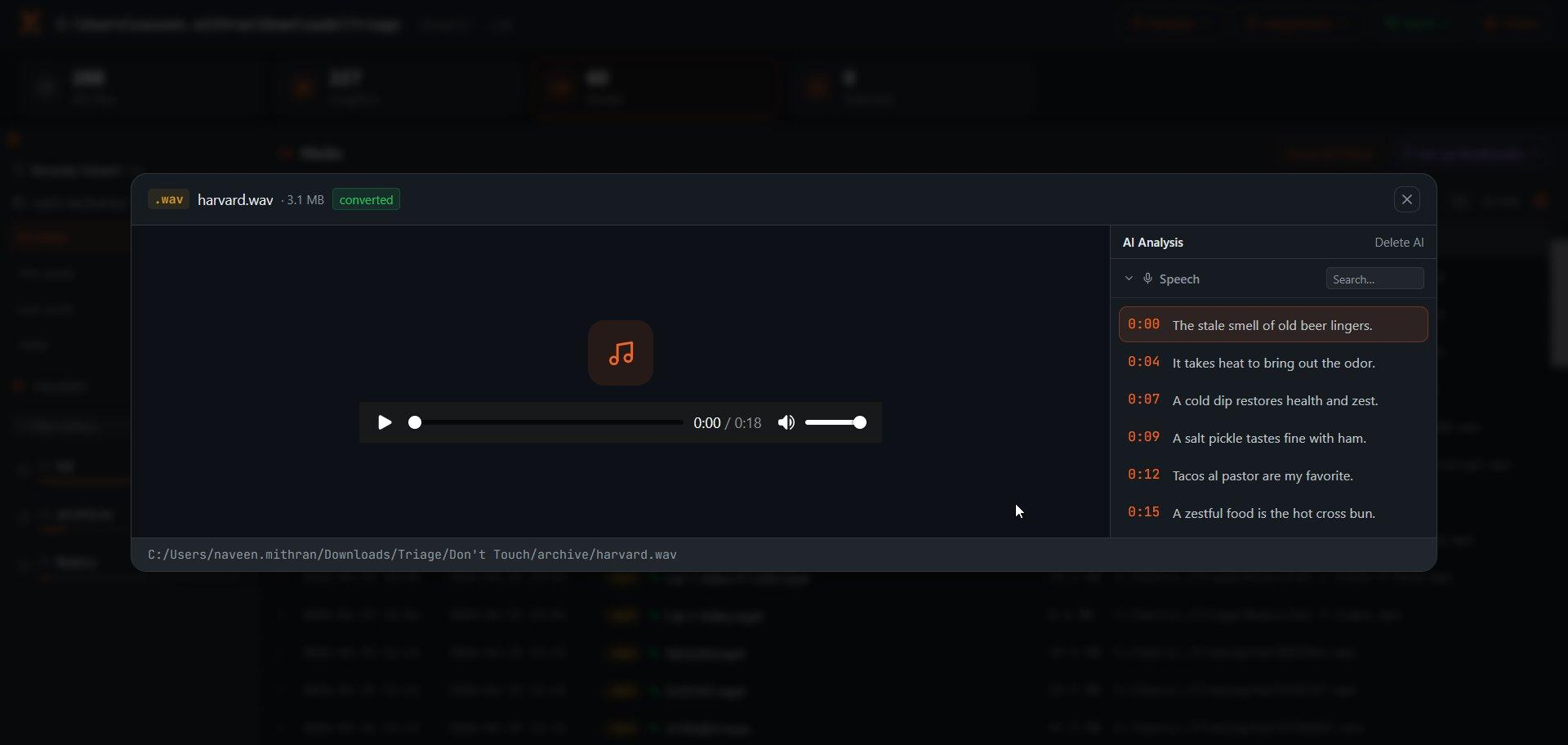
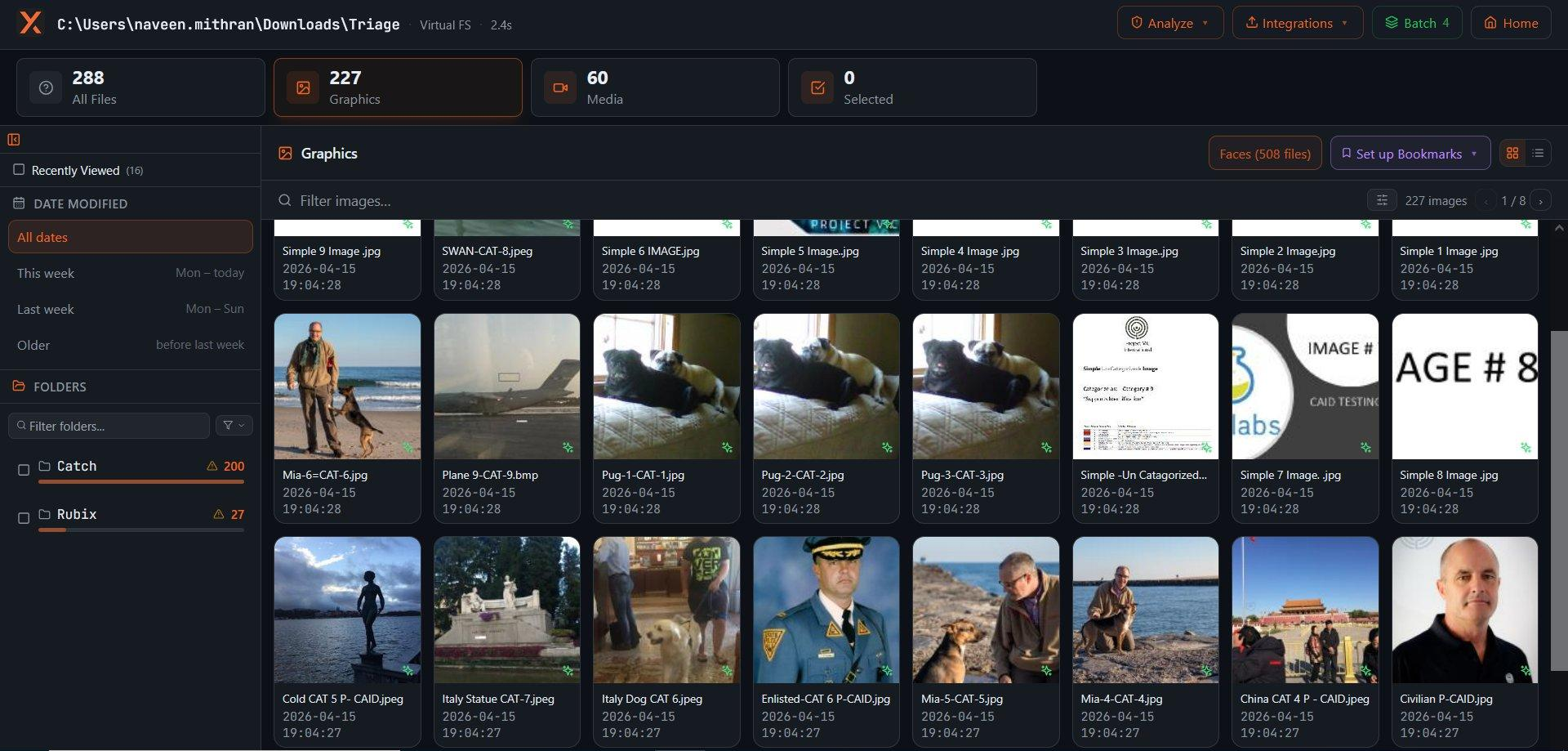
ARMOURop does more than summarize evidence or recommend what to do next. Exterro’s proprietary code performs the authorized work, including supported media analysis, transcription, known-hash comparison, communications review, artifact analysis, correlation, labeling, bookmarking, and findings organization. The result is executed analysis, not an AI-generated suggestion.
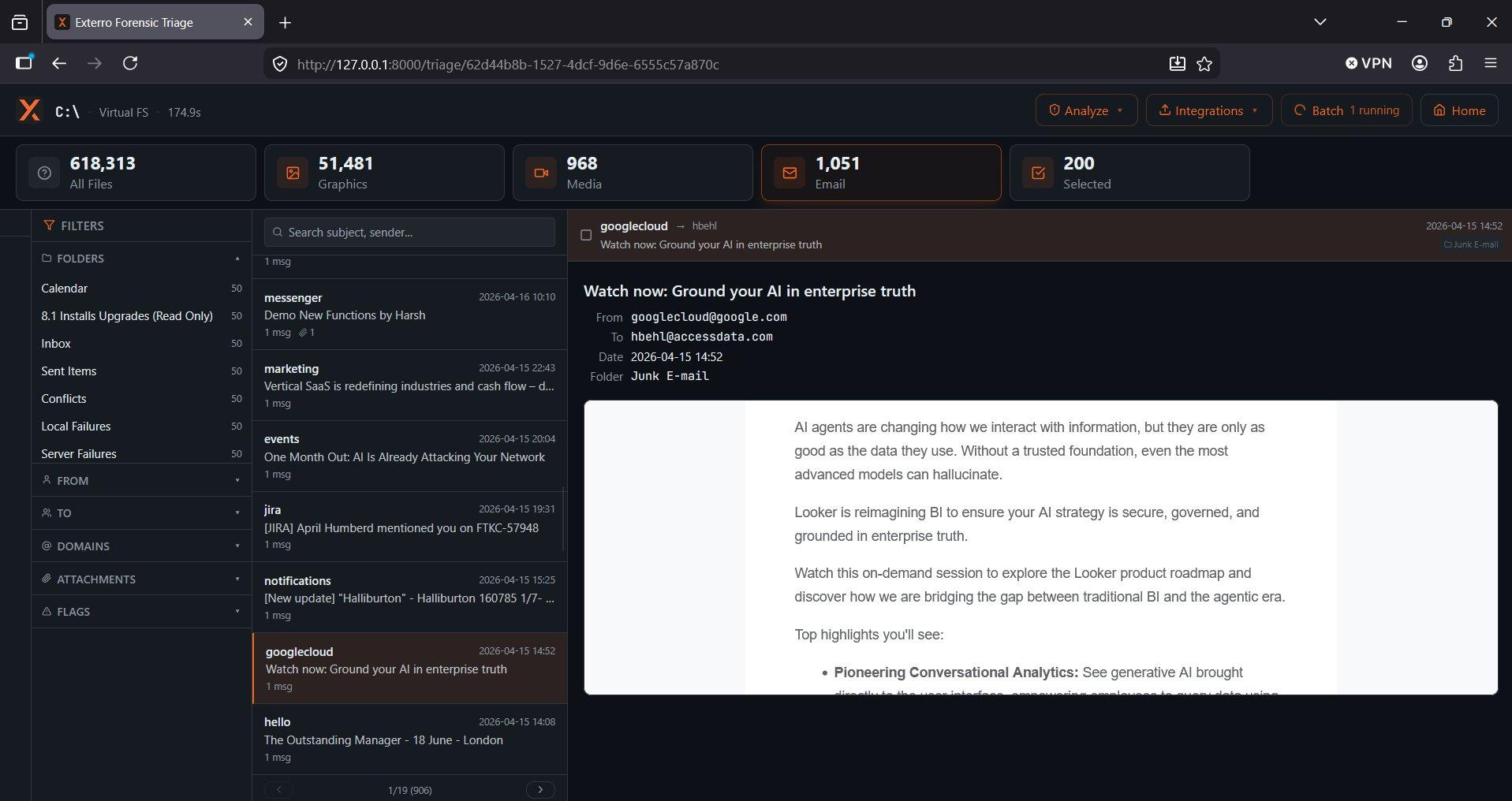
Critical findings rarely sit in one file or one evidence source. ARMOURop connects supported findings across media, communications, files, people, locations, devices, and events, helping examiners identify relationships and patterns that isolated searches and disconnected tools can miss

ARMOURop prioritizes the files, frames, communications, artifacts, and relationships most likely to advance the investigation. Examiners spend less time on blind searching and repetitive first-pass review while retaining responsibility for interpretation and judgment. Every surfaced finding remains subject to examiner review and validation.

The examiner defines scope, reviews supporting evidence, excludes false leads, refines the inquiry, and determines what the findings support. ARMOURop performs repetitive investigative work and documents the workflow, but the examiner retains authority over validation, interpretation, reporting, and every case conclusion.
ARMOURop operates on-premises inside the examiner’s controlled forensic environment. Sensitive
evidence is not sent to public cloud services, and evidence, workflows, findings, and validation remain under agency and examiner control.
See how ARMOURop moves an investigation from question to findings.
Explore resources for accelerating digital investigations and reaching defensible findings faster.

Learn how ARMOURop uses AI and Exterro forensic technology to accelerate locally executed investigations while preserving evidence control and examiner authority.

Learn how the FBI used Exterro FTK to analyze extensive digital evidence and reach actionable findings during a time-sensitive federal investigation.

Explore Exterro’s digital forensics platform for defensible evidence processing, analysis, review, collaboration, and reporting.