The FBI's Race Against Time: How the FBI Streamlined the Investigation of the Trump Assassination Attempt at the White House Correspondents' Dinner

The FBI's Race Against Time: How the FBI Streamlined the Investigation of the Trump Assassination Attempt at the White House Correspondents' Dinner
Host: Mike Hamilton, VP, Marketing - Exterro
Guest: Harsh Behl, VP, Product Management - Exterro
After an attempted assassination at the 2026 White House Correspondents' Dinner, the FBI had limited time to reconstruct a suspect's planning, communications, movements, and intent from millions of digital artifacts.
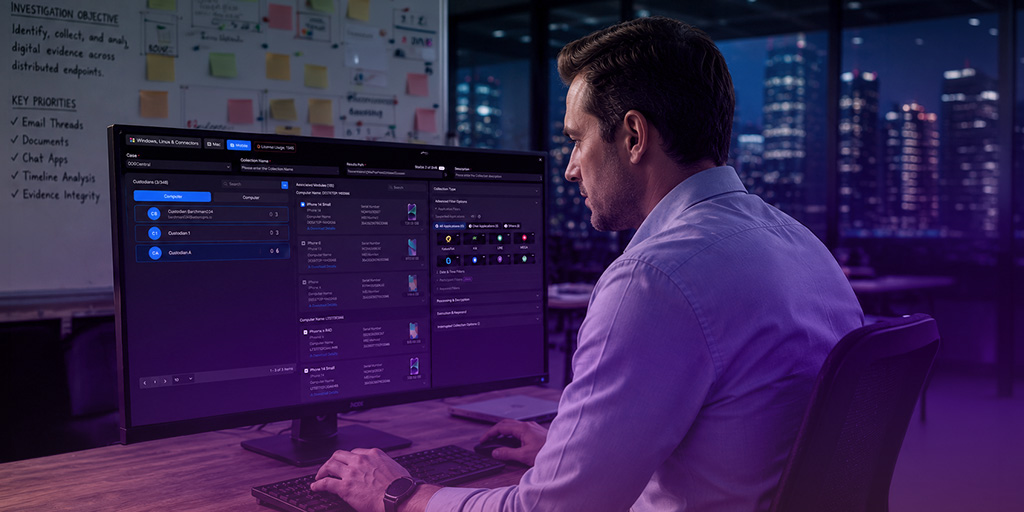
In this episode of Data Xposure, Harsh Behl, VP of Product Management & AI at Exterro, takes listeners inside one of the most time-sensitive digital investigations in recent memory. He explains how the FBI Washington Field Office used Exterro FTK Suite to process millions of digital artifacts, coordinate analysis across multiple investigative teams, and rapidly connect evidence spanning devices, cloud accounts, communications, financial records, and travel data.
This isn't a discussion about the attack itself. It's a look at what happens when investigators are forced to turn overwhelming amounts of data into actionable intelligence under extreme pressure.
For legal, security, compliance, and investigative leaders, the challenge is familiar. Whether responding to a cyberattack, insider threat, workplace incident, or regulatory investigation, success often depends on one question: Can you find the answers before time runs out?
Join us as we explore what organizations can learn from the FBI's response and why forensic readiness, AI-assisted analysis, and scalable investigation workflows are becoming critical capabilities in a data-driven world.
Subscribe on Your Preferred Podcast Platform
Apple Podcasts | Spotify | YouTube
Episode Transcript
Mike Hamilton (00:08)
A crisis doesn't announce itself. One moment everything is operating normally. The next investigators, security teams, legal counsel, and executives are racing against the clock to answer a simple question. What happened? When the White House correspondence dinner became the scene of an attempted assassination, federal investigators faced exactly that challenge. They needed to quickly understand a suspect's actions, intent, and planning–all while operating under intense public scrutiny and extraordinary time pressure.
But this story isn't just about a national security investigation. It's about something every organization faces today. The challenge of finding answers, heading across an ever-growing landscape of devices, communications, cloud platforms, and digital evidence. Because whether you're responding to a cyber attack, insider threat, a workplace incident, or regulatory inquiry, success often comes down to one thing. How quickly you can turn data into actionable intelligence.
Welcome to Data Xposure the podcast for data risk leaders. I'm Mike Hamilton. Today we're joined by Harsh Behl, Vice President of Product Management and AI at Exterro. We'll explore how digital forensics helps investigators rapidly piece together a complex investigation and the role AI is beginning to play in modern investigations, and what legal, security, privacy, and compliance leaders can learn from one of the most high-pressure investigative environments imaginable. Let's get into it.
Mike Hamilton (01:42)
Harsh, thank you for joining us on data Xposure
Harsh Behl (01:46)
Hi, Mike. Thank you. My honor and privilege to be here. Thank you for having me.
Mike Hamilton (01:51)
We're really excited to have you on the podcast. there's some really exciting materials that we're gonna review today, specifically around the White House correspondence dinner assassination attempt. I know investigators had less than 48 hours to build a complete picture of the suspect's intent, planning, and actions. from your perspective, a digital forensics perspective, what immediately stands out to you about a case like this?
Harsh Behl (02:18)
That's a great question, Mike. Every forensic investigation is important and critical to forensic investigators. But when you have something of this magnitude that the whole country or the world is watching, the pressure is a little bit more. It's about making sure that first you're helping the frontline officers with everything you can to help them do their job–whether it is surfacing the key insights which could help them with the arrests faster or it is about giving them the evidence that could help them prove an intent or file charges.
Any case like this comes with a lot of complexities. Complexities first digitally, complexities arise from the various different data sources, user behavior, proving the intent by correlating system data with the user data. These are just all the different things that a forensic investigator has to put together to build a story that could help somebody prove whether there was an intent or whether there is a crime committed or whether somebody was a victim of something or not. Everything that we do has a direct impact on people's lives. Margin of error is negligible. You don't really have a lot of room to make errors and hence the stakes are higher and as higher as you can imagine.
Mike Hamilton (03:50)
And from that investigation, from what I was reading in the news, investigators were dealing with millions of digital artifacts, spanning across devices, communications, cloud accounts, travel records, and even financial activity. From your perspective, how do you even begin to approach an investigation at that scale?
Harsh Behl (04:11)
Think about it, Mike. Today, every person in this world has a very big digital footprint. We use a lot of social media. We have a couple of phones, computers, and a whole lot of activity that we just do on internet. For investigators, in order to make headway when you have so many digital artifacts to be looked at, it's important to focus on things that truly matter. Most of these cases do have some sort of supplementary information that would come in from the investigating authorities. investigators would typically go by those.
But in general, we are living our lives and we are exposing ourselves or expressing ourselves the most on chat applications. Communication analysis becomes a key part of such investigations. Location analysis becomes a key part. It just depends on the type of case there is. And then based on the information that is accessible, an investigator would always try to find out what is going to get them to the facts of the matter faster and quicker and more efficiently. just varies case by case. And that's where the human intelligence goes hand in hand with the machine intelligence.
Mike Hamilton (05:32)
That is a great segue to the next question I had for you, Harsh. And one of the most interesting aspects of the White House correspondence dinner assassination attempt was the need to find critical evidence quickly. Where did AI help investigators accelerate the process? And what can organizations learn from that?
Harsh Behl (05:53)
We are seeing rapidly increasing use of AI globally by the investigators. I think investigators have very well understood now the value that the right use of AI can provide to cases. This is a risk averse community. People have to validate before they can go stand up in the courts of law and testify something. any investigator that picks up the technology that they're going to use, they have to have the confidence in it. And investigative community is starting to build that confidence. We are seeing customers and investigators utilizing AI just enough that helps them get to 80 % of where they want to get to.
They are using AI to surface anomalies, identify patterns. They're trying to surface that hidden truth that would typically take them days and hours for them to uncover themselves. When they apply AI for example, multimedia, they are no longer having to watch hours and hours long videos, CCTV footages, they can just go and search for the relevant content that they are looking for within the video using keyword searching, semantic searching. What that helps them is it gives them their time back. They are no longer watching three, four, five hours worth of video. They are watching those mini clips that gives them just enough information to prove whether this is what they were looking for or not.
Similarly on the documents, on the communication or chat analysis, investigators are now using AI to again surface anomalies there. Instead of reading through a 20, 30, 50 page document, they can read a quick summary and decide whether it's worth looking at that document any longer or not. You don't have to read through the chats as much. You can use AI to find was there a topic of interest that was being discussed as part of this chat communication. And then various different AI techniques could be applied to extract entities, what kind of people are being referred to in this chat, organizations being referred to, what was the mood of the communicators, so on and so forth.
What we are learning is that investigative community is now coming together. They're trying to understand how to effectively utilize AI that moves the case forward and gives them an exponential head start in their case. And we are really proud to be partnering with customers globally to bring the cutting edge technology to our customers.
Mike Hamilton (08:36)
Harsh, the way I'd analogize this is the human's always in the loop with AI, but it's almost like if you're wandering out in the woods, if you have a compass and a map, it makes your journey a lot more streamlined, And we take those tools for granted. And that's how, at least here at Exterro we're really approaching AI. Would you agree?
Harsh Behl (08:56)
I absolutely agree. think that's the perfect way to state it. You use technology as built for humans. Humans need to adapt, utilize the technology that can help them move forward, make their jobs easier, make their lives easier. AI is now starting to get to that point. There's still a lot of work to be done, but it's starting to get to a point where it is now making–I mean starting to make meaningful difference to the cases. And Mike, if you think about it, what is the impact of this? What is the impact of using technology like this? the impact of using a technology like this is a case that would typically take you weeks to close. Now you can get it done in days. Something that took you days, you can now do it in hours.
But the consequences of this is somebody is getting justice faster. You are helping make people's life safer. You're helping them get the justice they deserve. And if our technology becomes an enabler of that, I think that's the high that we as Exterroites and me as a product guy always have to continue to drive to work every day. That's what drives our passion. at the end, that's what we need to realize that it's not AI simply for the sake of incorporating AI, it's to drive the outcomes and helping investigators who in turn help people live safer lives.
Mike Hamilton (10:30)
It really goes back to the the human value that AI can help organizations, forensic examiners, corporate investigators get to the truth faster and it can change lives, like you said. One thing I wanna touch on Harsh is in an investigation like the investigation that we're talking about here, the presidential a assassination attempt.
There's so many different types of evidence. And to really understand a suspect's actions and an intent, you can't look at that evidence in a vacuum. And I know a lot of investigators have that pain point where they're looking at things in silos. Can you talk about why connecting the dots is often really the hardest part of any investigation?
Harsh Behl (11:17)
That's a great question again, Mike. It goes back to what I've been saying for a while now. Data volume and complexity will continue to grow. And that poses a significant challenge to the investigative community. Investigators were examining 100 gigs, 300 gigs, 500 gigs phones earlier. Now it's starting to be terabytes of phones, just the phones. Then pair this with other digital devices, computers, cloud storages, cloud repositories.
All of these hold valuable information from an investigative point of view. These have that evidentiary value that can make or break a case. connecting the dots is… extremely important because you want to get the whole picture and not just the part of it is a pain point for the investigative community.
However, I believe there are technologies out there now and of course, layering AI on top, for example, within the Exterro’s technologies as well. What it helps you do is it helps you look at phone computers, cloud data, all of that together. And it just helps you paint a picture that you would typically not be able to paint if you were looking at devices and data in silo. I've heard from investigators who would utilize the Wi-Fi connection events from the phone and layer it on top of the photos geolocation data to figure out where exactly the picture was taken from the geolocation, but at the same point, which access point of the Wi-Fi did the user connect to? Was it connected to a nearby coffee shop, a mall?
And that just drives the investigations forward, It tells you these are the other potential areas of investigation that you could use for your case, looking at a holistic picture helps you uncover the insights that you would typically never get to if you were looking at data in silos. And that's where we've been focused on a lot, providing examiners the capabilities to investigate data holistically and work on it collaboratively.
Mike Hamilton (13:37)
And for those in our audience that don't know, the traditional process is having a variety of different point solutions that will examine specific data sources like mobile versus what's on your laptop. Can you expand on that a little bit and give people what the traditional marketplace looks like?
Harsh Behl (13:56)
forensic community as a whole, we are the fans of validation. I do not want to say one tool can be the silver bullet for everything. That's not what I believe in. I don't think the investigative community believes in. we have been always a fan of letting, customers use the best of breed solutions over a single platform. That's what our focus has been. We are building that centralized platform that could be deployed in a lab, which allows investigators to use best of breed solutions that they may want to use for their cases, but bring back all the results and all the cases to that centralized platform that can, again, help you look at the data holistically. whether it is mobile computers, cloud data, you have the capability to collect all of that or bring in already collected data from other tools into our platform, apply various different investigative tools and techniques over it to slice and dice the data and get to where you want to get faster and quicker.
And also just lets you collaborate live on the cases, You have multiple people working together. It all helps to improve the efficiency. As such, as is, investigators do not have enough hours in the day. We are always lagging behind. we need to improve our modulus operandi. We cannot be processing same data three, four different times. We cannot be looking at data in silos and then manually correlating artifacts. That is where we need to start evaluating tools which can help you use best of breed, but from within the same platform and tie it all together in the same platform. that's where we are.
Mike Hamilton (15:45)
That's paramount, ⁓ you can see how there's so many different levels and having one central hub where you can communicate across evidence and really move that case forward is a game changer. One thing I'd like to talk about here is the time pressure that the FBI was under when they were responding to this national security event.
Many people in our audience won't face something exactly like that, but many will face a cyber attack, an insider threat, regulatory inquiry, or workplace investigation. What lessons from this investigation apply directly to enterprise teams?
Harsh Behl (16:22)
Mike, I do want to clarify. I think investigative community always have that time pressure for most of their cases. However, the magnitude of this case is so big that it's becoming more and more visible. But of course, the time sensitivity is always there for forensic investigators. The lessons that all of us learned from these type of investigations or that particular investigation is one, you have to have right amount of knowledge about the case. a collaborative approach where you can provide multiple teams access to the tools that can actually help you solve the case.
And in this particular example, there were more than one departments involved who were working on the case. you could imagine they would have absolutely needed a platform that could let them communicate, share their findings, so that all of that could translate into digital investigations work as well. one is you need to absolutely have means of collaboration.
Second is you have to have the right approach and framework to handling the scale of the data. When there comes investigations that have terabytes and petabytes of data attached to those, you need to have the right tools, the right frameworks that can help you cut through the noise and help you get to the facts quicker, write the evidentiary information quicker. Having access to the right technology, having, of course, access to the right people who have the right approach towards these cases, of course, having experience in such cases is always valuable.
But when you put the right technology in hands of those sharp minds, the results are exactly what the teams produced here. 48 hours and the charges were filed. That's a great example of the brightest minds coming together, having access to the right technology, and then helping deliver at a global stage, at a global level. those were some of the key learnings that we could all benefit from.
Mike Hamilton (18:37)
And in my opinion, it raises the bar. It showcases the FBI is able to do this and respond to something with this much data in forty-eight hours. Raises the bar. ⁓ for the leaders that are out there that are managing multiple different teams, legal departments, compliance departments, ⁓ wait and see shouldn't be the expectation anymore. Would you agree, Harsh?
Harsh Behl (19:00)
This absolutely raises the bar. The wait and see is no longer going to fly. The amount of data being generated in this AI world is just unbelievable. Exponentially large evidence sets are being consumed by the labs. They're having to investigate those. If you do not have the technology that helps you cut through the noise, your backlogs are just continue to… to increase and that means again going back to the human aspect that means that the person who deserves the justice who deserves the answers would have to wait that much longer. organizations are coming together or continue to come together to produce results like FBI did to take some learnings from there apply their own unique perspectives and techniques to it and
And they would continue to raise the bar from here onwards. And we are just lucky, fortunate, and privileged to be playing our role along this journey.
Mike Hamilton (20:02)
And we've seen our customers start reacting in the same manner as the FBI, being able to respond very quickly. this is a reality for organizations, not just for the FBI, but we've seen it with our customers and what we're trying to do is ensure that the community understands that there is this possibility of an immediate response that can really benefit and bring people to justice and protect organizations and people more effectively.
Harsh, I'm asking you to look in your crystal ball here. As data volumes continue to grow and AI becomes more sophisticated, how do you see investigations evolving over the next few years?
Harsh Behl (20:40)
The way I see them evolving over the next few years is that the data volume and complexity is going to continue to grow. Unfortunately, that's not going to stop at all. I do see a lot of AI being utilized in the cases because it is going to become humanly impossible to look at all this data. AI will continue to play a very important role for the investigators in all the different types of cases.
And I do see that AI will also help enable varied skill sets in the lab to perform forensic investigations, maybe not the entirety of the investigations, but it does present an opportunity to help people with various different skill sets come and do the forensic investigations, I see these as some of the trends that will continue to evolve. There will continue to be new different data types, new different operating systems and… new different challenges that will come towards the investigative community in forms of encryption, But it's just that this community has always found a way to help people. And incorporation of the latest and greatest technologies into the workflow of investigators will continue to rise and they will continue to move past the challenges and they will continue to help people.
Mike Hamilton (22:06)
Harsh, I've one last question for you today. If a legal security or compliance leader listens to this episode and wants to take one action tomorrow to prove their investigative readiness, what would you recommend?
Harsh Behl (22:19)
I would say first take a look at.
How are you approaching these investigations today? And are you happy with it? Are you prepared to answer the CISOs, the CTOs questions when a breach occurs? Or if you're a lab manager in a law enforcement space, is your lab equipped to help that meaningful difference to somebody's life? Are you able to prove somebody might be guilty or not and do you have the right skill sets, right tools in your lab to investigate cases when they come your way. people need to first answer those questions and then figure out what is the most important thing for them from there onwards.
What type of investigations will they be responsible for to be solved? And how do they want to approach these investigations? And who do they want to partner with? all of these things matter. And I would say, start from, do you have enough to make the difference?
Mike Hamilton (23:24)
That's a great way to sum things up and harsh one thing I'll flip its on on its head here a little bit. But for those leaders in organizations, those CISOs like you talked about, GCs, CIOs, this episode gives a heads up that maybe it's time to reevaluate your investigative process and what's possible out there and what your expectations should be for your teams. Harsh, thank you so much for your time today. It was a pleasure having you on. Appreciate all the insight.
Harsh Behl (23:54)
Thank you, Mike. It was a pleasure as well. Bye bye.
Mike Hamilton (23:59)
As we've discussed today, the biggest challenge in an investigation isn't always collecting data. It's finding the answers before time runs out. Whether you're responding to a security incident, an internal investigation, litigation, or a regulatory inquiry, the organizations that perform best are rarely the ones scrambling to build a process in the middle of a crisis. They're the ones that invested in readiness before the crisis began.
A big thank you to Harsh Bell for joining us and sharing his perspective on how modern investigations are evolving and what organizations can do today to better be prepared.
If you enjoyed this episode, be sure to subscribe to Data Xposure, brought to you by Exterro. And if you found the conversation valuable, share it with a colleague responsible for legal, security, privacy, compliance, or digital investigations.
Until next time, remember, your organization's greatest asset is its data, but if you can't find, understand, and act on it when it matters most, it can quickly become your greatest risk. I'm Mike Hamilton, thanks for listening.