Strategy, Systems, and People: 4 Lessons in eDiscovery Alignment
In the high-pressure world of modern litigation, failure is rarely the result of a lack of effort. Instead, chaos often stems from a lack of alignment between strategies, technical systems, and the people operating them. To move from a reactive state to one of total control, eDiscovery and Legal Operations leaders must look beyond the software and focus on the structural and human frameworks that drive successful outcomes.
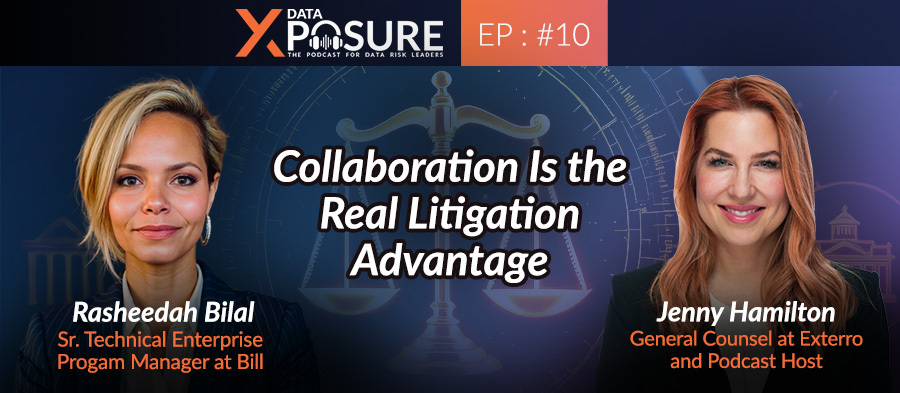
During the latest episode of Data Xposure, the podcast for data risk leaders, Exterro General Counsel and Data Xposure host Jenny Hamilton sat down for a discussion about the skills and mindset necessary to effectively lead eDiscovery teams with Rasheedah Bilal, Senior Technical Enterprise Program Manager at Bill.com. Drawing from their real-world experiences across the military, education, and corporate IT sectors, they identified four foundational pillars for streamlining the eDiscovery process and ensuring teams remain aligned and in control.
Listen to the whole episode here.
1. Define the Business Problem, Not the Technical Solution
A frequent friction point between Legal and IT occurs when stakeholders attempt to "solution" a technical hurdle before clearly defining the business need. When legal teams interject themselves into technical implementation—often a result of human nature to want to help—it frequently leads to unrealistic timelines or missed requirements.
True efficiency is found in precise problem articulation. By clearly describing the business parameters and goals while allowing technical Subject Matter Experts (SMEs) to design the specific "how," teams can avoid treating mere symptoms and instead solve root causes.
Bilal explains, “When people have an "ask," they shouldn't get stuck in the solutioning. Describe your problem, but let the experts solve it… It's human nature. The more of an SME you become in your area, the easier it is to confuse your intellect in that one area and assume you're an expert in every other field. If we all took a pause, we could find a story where we tried to step into someone else’s lane.”
2. Respect Functional "Domains of Risk"
Discovery workflows can easily become bottlenecked when stakeholders interject themselves into a domain of risk that is not theirs to assume. While litigators are experts at coming up to speed quickly on complex matters, this intellectual agility does not always translate to technical eDiscovery system administration.
To maintain a defensible process, organizations must protect people from themselves by managing user scope. This includes:
- Limiting Administrative Rights: Attorneys or senior partners often lack the daily system familiarity required to manage complex templates without accidentally breaking established workflows.
- Role-Based Access: Ensuring that only those with the appropriate technical depth have high-level authority in audited programs prevents system-wide errors.
Bilal concludes, “The person whose domain of risk it is needs to be the decision-maker. As a leader, you can’t delegate risk. Conversely, if it’s not your risk to assume and you insert yourself, you’re just bottlenecking the system.”
3. Build Resilience Through "Failing Forward"
The legal industry is historically risk-averse, which can lead to friction with the rapid innovation required in IT. To bridge this gap, leaders should foster a culture that allows teams to "fail fast and fail forward".
This approach requires providing "invisible guardrails"—allowing teams to experiment with new workflows outside their comfort zone as long as safety, legality, and ethics remain intact. Crucially, every minor failure should be documented through a Standard Operating Procedure (SOP). This ensures that the process evolves to stand the test of time, regardless of who is currently in the position.
4. Leverage Influence Over Authority
Perhaps the most critical "hard skill" for modern eDiscovery leaders is the ability to use influence rather than authority. Because eDiscovery leaders often lack direct hierarchical power over the technical or security teams they rely on, success depends on intentional relationship-building.
- The Capacity for Grace: Investing in human connection and "small talk" builds an emotional reservoir. Knowing your technical partners personally makes it significantly easier to request urgent assistance when high-stakes litigation deadlines loom.
- Proactive Technical Mentorship: Scheduling time with experts to learn the basics of technical concepts, such as APIs, builds the intellectual bridge and credibility needed to motivate cross-functional teams.
- Conversational Intelligence: Simple shifts in communication—such as providing context and reassurance before requesting a meeting—build the "brain chemistry for trust" rather than a flight-or-fight response that impairs work quality.
As is the case in many other disciplines, for eDiscovery and litigation, strong outcomes aren’t purely about the technology. They’re about the people and relationships. Investing time in these so-called “soft skills” can make all the difference.
To learn more about how leaders can align eDiscovery teams for the best outcomes, listen to Episode 10 of Data Xposure, The Human Side of Readiness: Coaching Legal, IT, and Security Teams for Litigation Success, today.