Exterro ARMOURop is an on-premises, AI-powered forensic investigation solution for evidence loaded into the examiner’s ontrolled environment. The examiner defines the objective, AI plans the supported workflow, Exterro’s proprietary forensic code performs the authorized analysis,
and the examiner validates the findings and determines what the evidence supports.



ARMOURop changes where forensic investigations begin. Instead of manually selecting and sequencing individual functions, examiners start with what the case must establish. ARMOURop then helps surface, connect, and organize relevant findings across the evidence so examiners can focus on interpretation, validation, and case decisions.

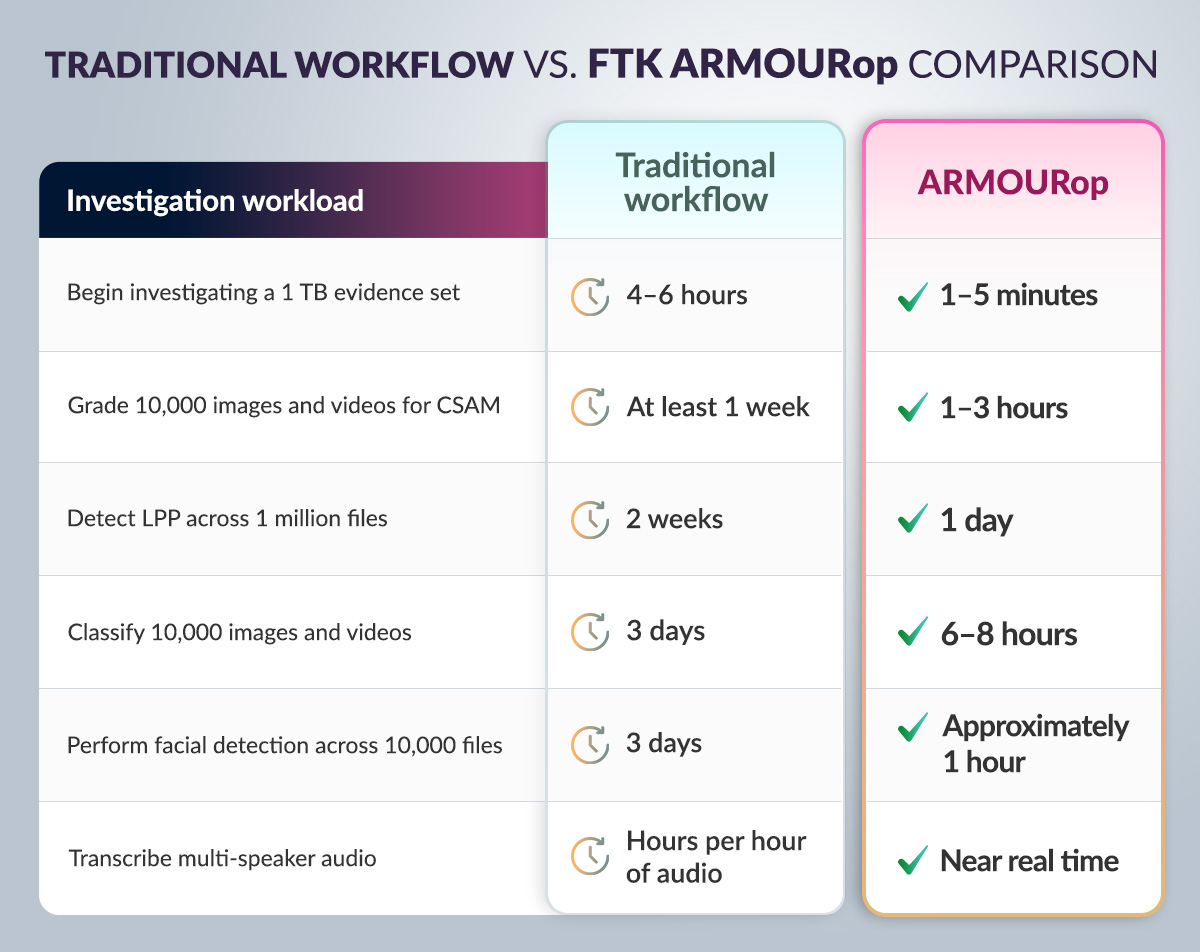
Representative investigation workloads demonstrate how ARMOURop can help examiners begin working sooner, reduce repetitive review, and reach case-relevant evidence faster.
See how an examiner defines the investigative objective, how AI plans the supported workflow, and how Exterro’s forensic code performs the authorized analysis. Follow the results through evidence connection, examiner validation, and reporting.

Representative workloads show how ARMOURop can shorten time to first review and reduce repetitive analysis.

AI interprets the investigative objective and determines which supported forensic steps to run and in what order. Exterro’s proprietary code performs the authorized analysis, while the examiner sets scope, reviews the evidence,validates the findings, and owns every conclusion.

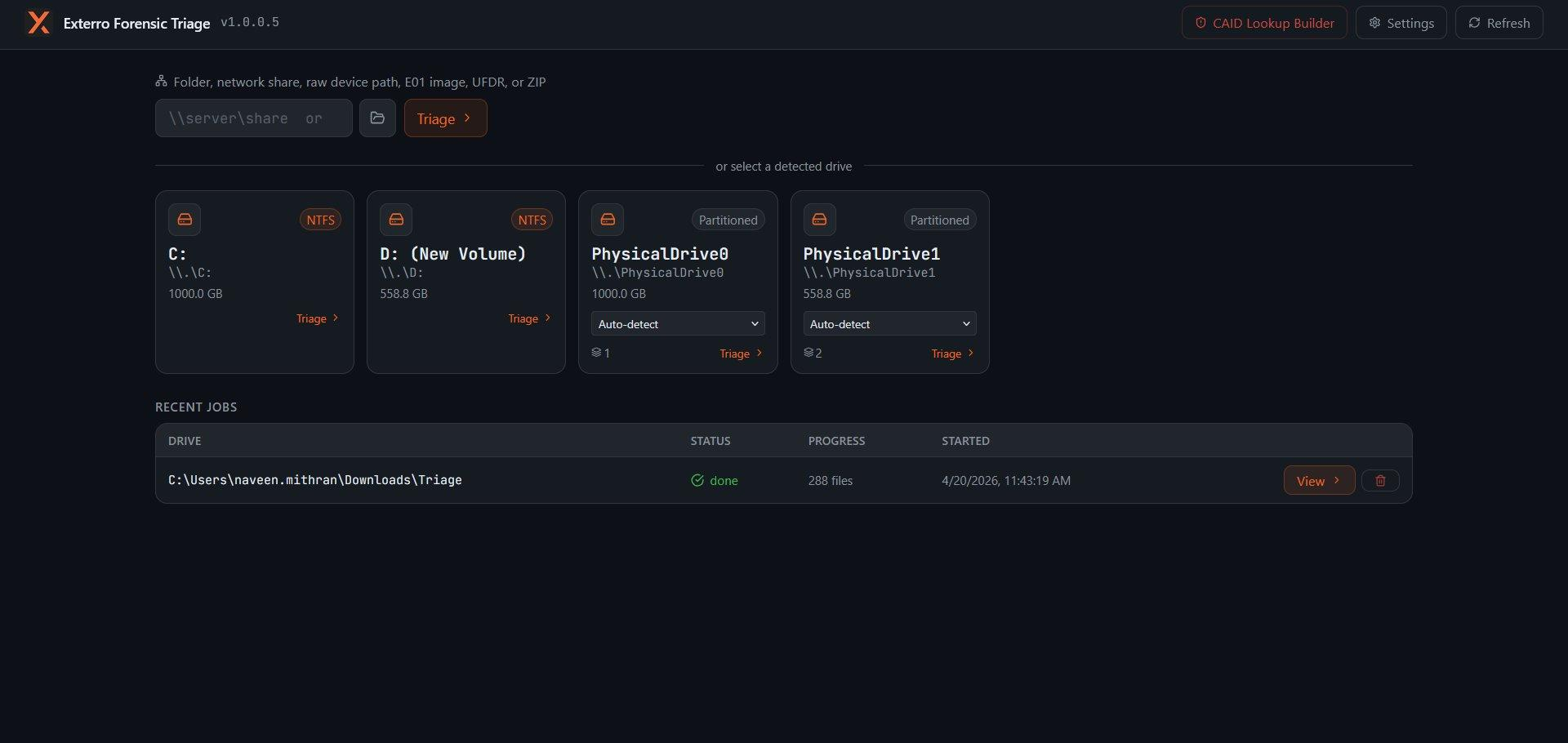
Evidence never arrives in one shape — a laptop image from one seizure, a phone extraction from another, a network share, a ZIP from a partner agency. Armour OP ingests all of it: live folders, network shares, raw device paths, E01 disk images, UFDR mobile extractions and ZIP archives. The home console auto-detects attached drives, including partitioned and NTFS volumes, and offers one-click triage for each. Recent jobs show live status and progress, and multiple cases run in parallel — so no device sits on a shelf waiting for the right tool or a free examiner.
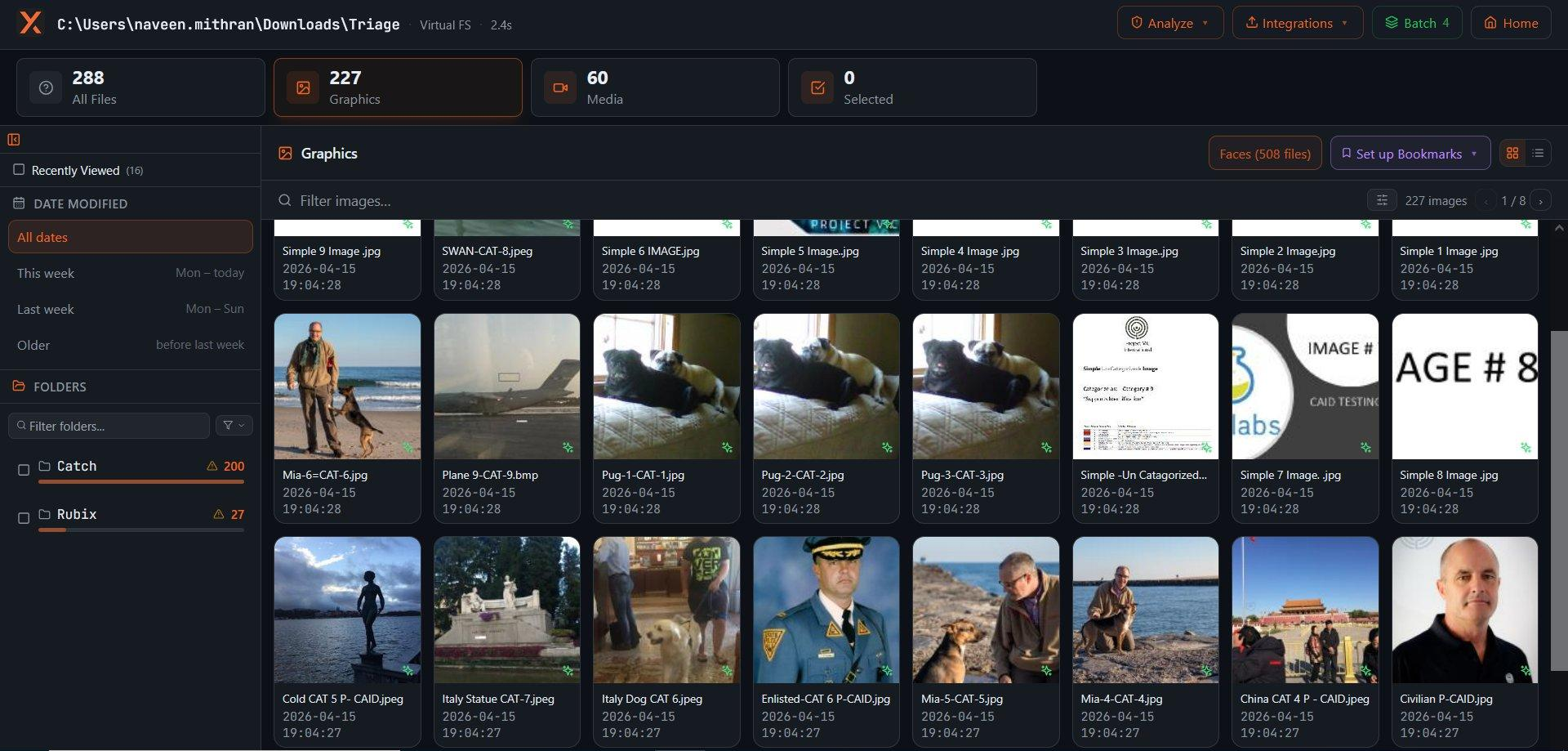
DFIR-aware vision models categorise and describe every image and video as it lands — documents, vehicles, screens, scenes, people — so a case collapses from an endless grid into the handful of categories that actually matter. Classifying 10,000 files drops from three days of manual review to six to eight hours. Examiners filter to a category, confirm what's relevant, and move on. The model proposes; the examiner decides what becomes evidence.

Faces are detected and clustered automatically across the entire data set — a single case can surface hundreds of distinct individuals (477 in one real case). Select any person and immediately see every image and video they appear in, without opening a single file. Automated facial detection across 10,000 files falls from three days to about an hour. In homicide, CSAM and violent-crime work, that's the difference between identifying a suspect this shift and identifying them next week.

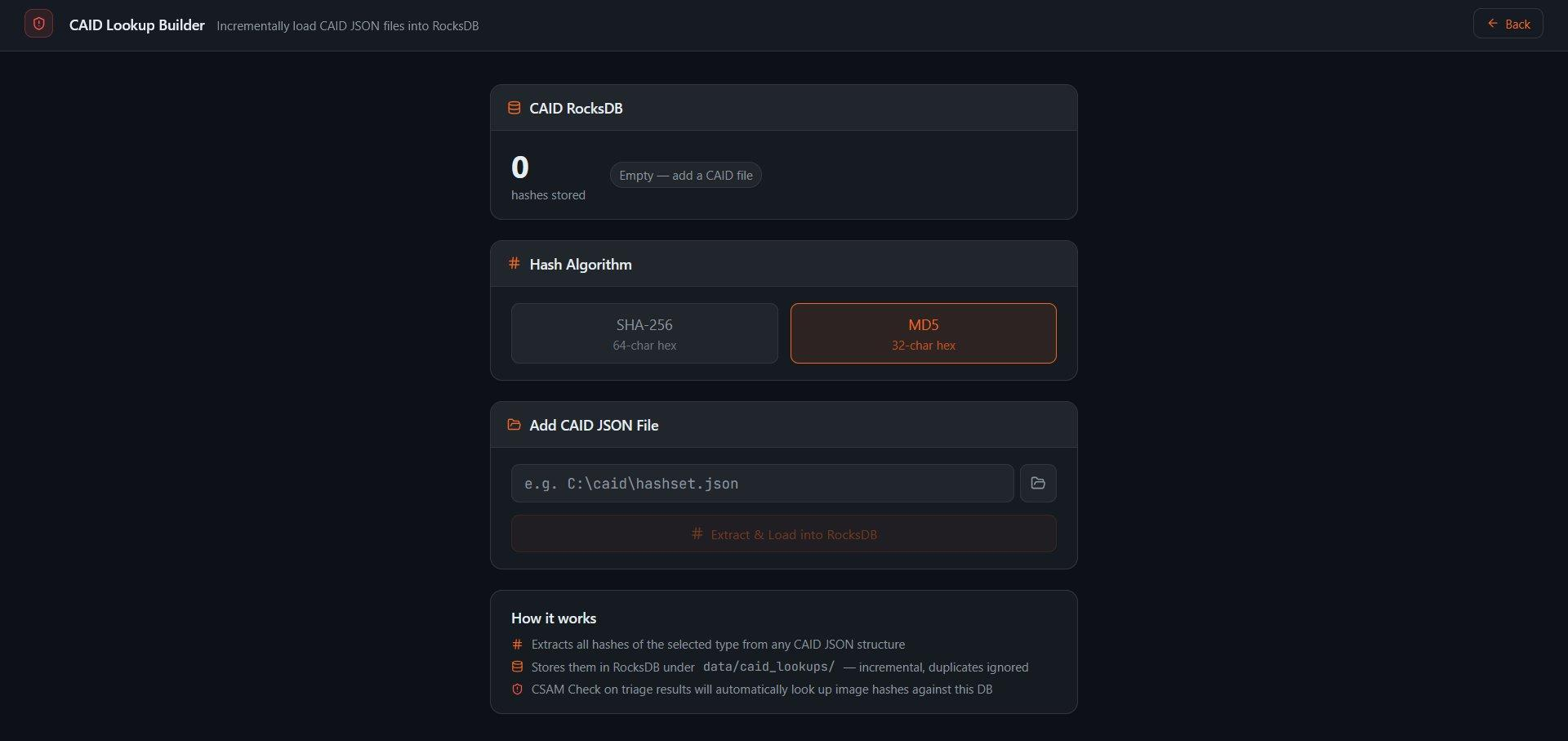
A built-in CAID Lookup Builder loads CAID JSON hash sets (SHA-256 or MD5) into a local RocksDB store on your own hardware. Every triage result is checked automatically, flagging known illicit images without a human opening them — duplicates ignored, lookups incremental. Grading 10,000 images and videos drops from a week minimum to one to three hours. No separate tool, no cloud lookup, and far less time spent exposing your team to the worst material in the case.

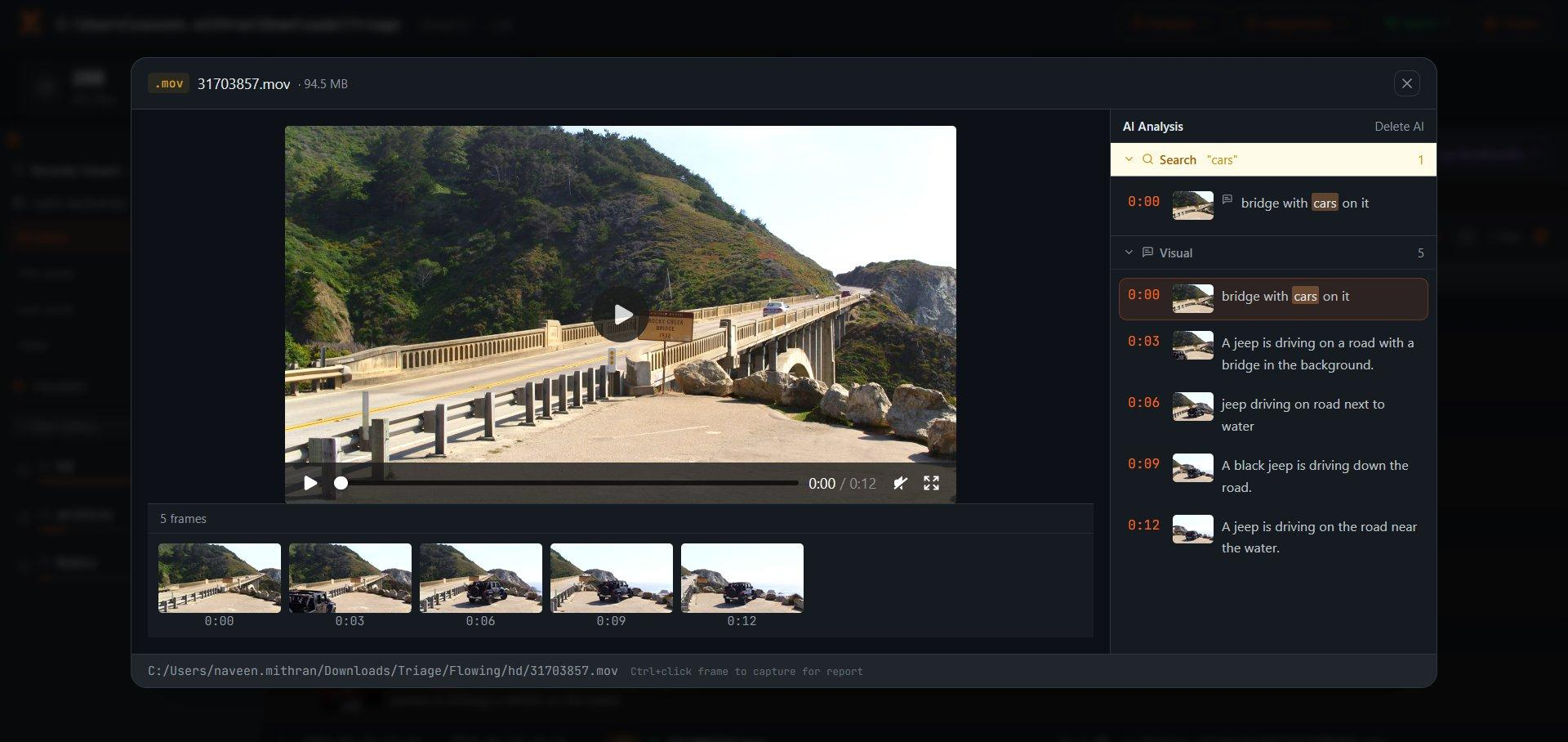
Video is where cases hide — dashcam, body-cam, CCTV, seized phone clips — and it's where examiners lose entire days scrubbing timelines frame by frame. Armour OP breaks every video into representative frames and gives each one its own AI-generated description, so the footage becomes searchable text. Search "cars" across a drive-cam clip and jump straight to the matching frame; Ctrl-click any frame to capture it for the report. Hours of watching collapse into seconds of searching — and the examiner still decides what the frame actually proves.
ARMOURop operates on-premises inside the examiner’s controlled forensic environment. Sensitive
evidence is not sent to public cloud services, and evidence, workflows, findings, and validation remain under agency and examiner control.
See how ARMOURop moves an investigation from question to findings.
Explore resources for accelerating digital investigations and reaching defensible findings faster.

Learn how ARMOURop uses AI and Exterro forensic technology to accelerate locally executed investigations while preserving evidence control and examiner authority.

Learn how the FBI used Exterro FTK to analyze extensive digital evidence and reach actionable findings during a time-sensitive federal investigation.

Explore Exterro’s digital forensics platform for defensible evidence processing, analysis, review, collaboration, and reporting.