Why Most Legal Departments Overspend—and How Legal Ops Can Help Fix It
Why Most Legal Departments Overspend—and How Legal Ops Can Help Fix It
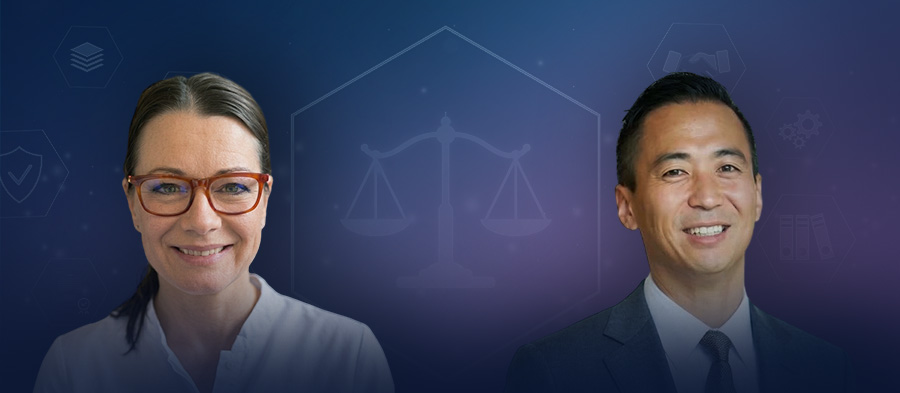
Host: Mike Hamilton, VP, Marketing - Exterro
Guest: Alayne Russom, Director of Legal Operations - Thrivent
Corporate legal departments are under constant pressure to control costs while managing growing workloads across litigation, investigations, and compliance. Yet many organizations still overspend, often because technology, vendors, and operational processes lack centralized ownership.
In this episode of Data Xposure, Alayne Russom, Director of Legal Operations at Thrivent, explains how legal ops can bring structure, visibility, and discipline to the business side of legal.
What listeners will learn:
How legal departments overspend and why fragmented ownership of technology and vendors drives unnecessary costs
Strategies for reducing outside counsel spend by bringing more work in-house
How legal ops leaders can optimize processes so legal teams work more efficiently across the business.
Subscribe on Your Preferred Podcast Platform
Apple Podcasts | Spotify | YouTube
Episode Transcript
Mike Hamilton: Corporate legal teams today are under constant pressure to manage costs, manage growing workloads, and stay ahead of risk across litigation, investigations, and compliance. But here's the challenge. Even with more technology, more vendors, and more resources, many legal teams are still overspending. And it's not always because of one big decision. More often, it comes down to something less visible: fragmented ownership. Fragmented ownership of technology, of vendors, and of the processes that actually run the business of legal.
What happens when legal operations steps in and starts running legal like a disciplined business? That's what today's conversation is all about. I'm Mike Hamilton, VP of Marketing at Exterro, and this is Data Exposure, brought to you by Exterro, the leader in eDiscovery, data privacy, forensics, and data risk management technology. Today, I'm joined by Alayne Russom, Director of Legal Operations at Thrivent.
Alayne has built her career at the intersection of legal, technology, and operations, starting on the front lines as a paralegal and evolving into a leader focused on optimizing how legal work actually gets done. In this episode, she shares how centralizing legal technology and vendor management helped her uncover millions of dollars in savings, how to rethink outside counsel spend by bringing more work in-house, and how legal ops leaders could streamline processes across the business without slowing teams down.
Alayne, welcome to the podcast. Before we get into the meat of the presentation, I really want to learn more about you and how you got started in the industry and what really drew you to it.
Alayne Russom: Well, thanks for having me, first of all. And I also just want to give a quick little disclaimer that the opinions and things that I state today are my own and not that of my employer. But how I got into the legal field—what drew me into it—when I was in college, I was a criminal justice major. I had a dream of going to law school and becoming a criminal defense attorney. Really, I wanted to be a public defender. It turned out law school wasn't for me.
Instead, I became a litigation paralegal, which was actually really incredibly rewarding. I worked in a couple of law firms before coming to my current employer in 2005. The thing I liked most about being a paralegal was digging into each case and looking for that needle in a haystack.
Mike Hamilton: Mm-hmm.
Alayne Russom: I loved the discovery process. I loved reading emails, notes, medical records. I think I was a unicorn in that I really loved summarizing medical records.
Mike Hamilton: Yeah.
Alayne Russom: And I just found that fascinating.
Mike Hamilton: Right.
Alayne Russom: Employment records, just everything. In 2013, I took on a two-year temp role leading our code of conduct office, which included conducting internal fraud investigations. I became a certified fraud examiner, and I was able to get my fill of digging into each of the cases the same way I did as a paralegal. After that role ended, I pitched the idea of developing and leading an eDiscovery program that would support both litigation and our internal investigations. That was approved and continues to be a bucket of work I'm responsible for today.
Mike Hamilton: That's a really interesting path to where you're at now. You're the Director of Legal Operations at Thrivent. And before we get into the next question, I have to follow up. You're the one that suggested that you develop a program around eDiscovery and internal investigations?
Alayne Russom: Correct.
Mike Hamilton: Tell me a little bit about how that came into your mind, how you got started, how you proposed it. People would be really curious because that's a big undertaking.
Alayne Russom: The original plan was that I would go back to being a paralegal, but I really thought that there was a bigger opportunity there. I saw the parallels between conducting investigations and digging into litigation cases. Really, it's all an investigation, right? And I knew that there was technology out there that could support that, and I thought there was a big opportunity to bring those worlds together and find the synergies where the work crossed paths—that it could be a really good support system. Developing a process that was consistent across all of legal and investigations, it's really created a lot of consistency...
Mike Hamilton: Mm-hmm.
Alayne Russom: ...in the work perhaps, and ways that people can do things more efficiently and better, quite frankly.
Mike Hamilton: Yeah, that's pretty amazing.
Alayne Russom: Yeah. The program has... it's got training. Everybody's using the same system. We're using templates where we've got an auditing feature. We've got a very defensible process, and a lot of the investigations flow right into litigations. A lot of that work is just done ahead of time.
Mike Hamilton: And so give me the "before" picture. What did it look like before you implemented all these changes?
Alayne Russom: Oh, boy. Everybody did the work differently. We were tracking legal holds on spreadsheets.
Mike Hamilton: Mm-hmm.
Alayne Russom: I remember back in the day of printing out a memo and sending it through interoffice mail advising a custodian that they were on legal hold and then having to follow up with them manually. Some people did this by email. Some people did this through interoffice mail. I think there were probably conversations that were had by phone. There were some folks that did a better job of checking all the boxes than others. Just sending out the legal hold in and of itself is not sufficient.
Mike Hamilton: Right.
Alayne Russom: You need to follow up, make sure the custodian responds, acknowledges, tells you what data they have. And then some people stopped there, looking at what they had for data until it came time for, "Okay, now we need this for litigation. I hope our custodian followed the rules and actually kept that data." Sometimes custodians don't have any control over...
Mike Hamilton: Mm-hmm.
Alayne Russom: ...how long data stays in the environment. You have to really follow up. We looked at all of that and made sure that we had a process that made sure that we were performing our due diligence.
Mike Hamilton: And when you talk about "we," obviously, you're the Director of Legal Operations. Are you kind of a one-man team when you're ensuring this consistency, or do you have people that you work with that help enable these processes?
Alayne Russom: I have one individual that reports directly to me. For this entire process, I would say we're a two-man team, but I like to actually think of our team as being much larger. I don't necessarily need to have everybody reporting to me...
Mike Hamilton: Right.
Alayne Russom: ...to get a consistent process. We have litigation attorneys and paralegals that I consider to be part of that team as well. We're all part of the same team, even if we're all reporting to somebody different. We're all following the same process. I made sure to be consistent and bring people along on the journey, seek feedback. It was just all part of the change management and getting that buy-in from everybody that this is the right way to do things. And it works. And over time, you build up that trust and as an expert, people do look at me as an expert now, even though I'm not an attorney, and we all have mutual respect. It just works well.
Mike Hamilton: And how many people are we talking about here that you're trying to help enforce a process and create that consistency and repeatability? How many people are you trying to coordinate across?
Alayne Russom: I mean, it's about 10 people.
Mike Hamilton: Yeah.
Alayne Russom: Yeah. It's not a huge team. We do have some one-off litigations, like maybe our distribution attorney will have a strange litigation matter that'll pop up, and she doesn't have a paralegal that assists with that, so I'll step in, and I'll help with that. We all pitch in, we all help each other out, and we get the work done.
Mike Hamilton: The question that I have based on all your experience, right, is how do you know when a process is actually broken versus, "Hey, maybe I just need a tool to help manage this process?"
Alayne Russom: Yeah. There's a couple reasons this happens. First, we get siloed in our work teams. We have people that aren't talking to each other about the work or how it's done or what tools are being used. It's the old adage, "We don't know what we don't know." Having a centralized team that has insight into the various tools and processes are essential to understanding those capabilities.
Another problem, like we talked about earlier: change management. If you have poor change management, that's another reason for that happening. I've seen tools that have very robust capabilities that no one will adopt because they're not user-friendly and appropriate training hasn't happened. People are left to try and figure it out on their own.
Mike Hamilton: Mm-hmm.
Alayne Russom: It's not going to happen. That trust becomes broken. The tool's basically useless. Or possibly implementation doesn't go well, and the tool breaks early and often, and the trust in the tool, again, is never established. It becomes "shelfware," when all along, good implementation and proper change management would've produced a much more desirable outcome.
Mike Hamilton: That's a key phrase that you just used there, which is "change management," because the next question I have for you relates to that, and that's with how you've helped organizations save time and money by centralizing your tech stack and retiring old systems. Why do you think it's so easy for professionals anywhere, albeit if they're in the legal department, to accidentally end up using technology that they buy on their own, or they get signed off with their own manager, but they don't talk to the rest of the team, and you go to someone's desk, and you see, "Hey, they're using technology X," and you're thinking, "Well, I could use technology X." How do you think that happens? Why does that occur?
Alayne Russom: I'll just say process improvement is something I'm really passionate about.
Mike Hamilton: Mm-hmm.
Alayne Russom: I'll ask people, "Show me how you do this process," or, "What are you doing today?" or, "What are you using today?" And then I keep that in the back of my mind. I'll tap into not just my paralegal experience, but also my experience running the code of conduct office or my experience in having supported another team. I really like using tools that we already have in place to fix broken processes. And obviously, if we don't already have a tool, we may want to start looking for something new. But a lot of processes aren't actually broken. They're just perhaps being used by people who are uninformed that there's a better way to do it.
Mike Hamilton: Mm-hmm.
Alayne Russom: And people get stuck in an autopilot mode. I like working with people to try and find a better way to do things. COVID was a great example...
Mike Hamilton: Yeah.
Alayne Russom: ...of helping people with that. We all had to go and work from home, and people were completely lost without that copier or without access to markers to redact things. It was really interesting. Or the notary process was another great process. I implemented a tool so that we could do remote notarizations and a process for getting people on that remote notary tool. That was another great example. Having a centralized person...
Mike Hamilton: Mm-hmm.
Alayne Russom: ...that's working with everybody, that sees all the different processes, can help connect those dots and connect people to technology, connect people to people. It really helps to break down those silos and get people working together.
Mike Hamilton: Let's talk more about how to minimize costs, because you've noted a couple different ways that you help to increase efficiency. Let's talk about cost, and I know that's always on the top of mind of a legal operations professional. You've worked with outside counsel, and you've saved a lot of money trying to utilize them more efficiently and more effectively. So for a department stuck with, let's say, rising rates from outside counsel, how do you—or how have you—started the conversation about bringing more of that work back in-house, and what's the value of that?
Alayne Russom: Yeah. First, it's important to understand what you're being charged. Having a process in place to regularly review each outside counsel attorney's rate is super important. You need to do that regularly, be it annually or every two years. You need a system that will audit to make sure you're being billed according to the agreement you've worked out with that law firm. That is how you get the data, and then you let that data paint a picture that shows the actual cost of using outside counsel.
Mike Hamilton: Mm-hmm.
Alayne Russom: I've seen rates increase by as much as 20% in one year from a law firm partner. It's super important to pay attention to that. But once you have that data, you can determine what to do next. Here's an example as a powerful conversation starter to do with in-house counsel: Compare your law firm timekeeper rates from last year to this year and assume that all the hours are flat in your current year. If all the work is the same, what is the difference between what you'll pay this year and what you paid last year? It's eye-opening.
Firms have increased their rates due to having to purchase new technology. There's an expectation that law firms are using AI. That was an increased cost to them. But AI is going to cause them to do their work more efficiently.
Mike Hamilton: Mm-hmm.
Alayne Russom: It's not going to be billed out. Something that was maybe billed out that took them five hours of time might only take them one hour now. They have to recoup that cost somewhere. We've seen a huge increase in those rates. Another thing to look at is which timekeepers are billing the most. What is their level within the firm? Is the right level in the law firm performing the work? Are we negotiating lower rates? You can actually see that. If the firm says, "Okay, this is our base rate, but we negotiated a 10% discount," you can report on that. You can report on alternative fee arrangements.
We know what the hourly rate is. We know our spend with XYZ firm is $2 million a year. Maybe the special project they're working on for us, we could just negotiate a flat fee or a capped fee or something. Is it possible to do this in-house without adding additional bodies? When you see the data, when you present the data, it paints a compelling picture to do more in-house.
Mike Hamilton: And take me behind the curtains. Are you the one analyzing this data, and then you're having individual conversations with...
Alayne Russom: Yes.
Mike Hamilton: ...attorneys, or are you having that conversation with their manager to say, "Here's some white space in which we can optimize spend?"
Alayne Russom: I do this in partnership... we have a finance partner, so I do this in partnership with our finance partner. I make sure that he knows. He can see what we're spending as well. And I run the reports out of our system that's showing... I have access to a little bit more data than he does. We work together and we meet with our senior leadership team within our general counsel's office, and they can see which Dept IDs are using the most in outside counsel.
We can see accruals. We know what's going to be billed. And it's when you're showing them a picture that shows we're going to be spending X million dollars more this year versus what we spent the previous year, and maybe you even have a mandate to reduce your overall budget. You may have to add on extra bodies. You can see that you're going to be spending more on outside counsel. Where can we save money? Obviously, bringing stuff in-house is going to be the best bet.
Mike Hamilton: Just off the top of your head, what are some of those areas that you feel are the best areas to bring more work in-house, just generally speaking? Where have you seen legal departments take something that has been outsourced to outside counsel and bring that back in-house? And what's the low-hanging fruit there?
Alayne Russom: Two things. The first one I would just say is legal research in general.
Mike Hamilton: Right.
Alayne Russom: There are so many tools out there that I... and again, it's a tool you're going to have to purchase, but the cost savings you're going to realize are significant. So legal research, number one. Contract review is probably another piece of that. The other piece, of course, is litigation—the discovery phase of litigation. A lot of that can be done in-house as well, especially around the data review.
Mike Hamilton: And we'll hit on that here in a second, but I want to get back to... you have these conversations, you're making intelligent business decisions based on the trends and how much money you're spending. What has been the response from the law firms that you've been working with? Has it been, "Oh, well, we'll work with you to minimize the rate?" Or has it been shock, "Well, you're going to have to go somewhere else?" What's that response been like?
Alayne Russom: Definitely not shock.
Mike Hamilton: Mm-hmm.
Alayne Russom: Most law firms, at least most mid-to-large size law firms, do this for a lot of their clients.
Mike Hamilton: Mm-hmm.
Alayne Russom: When you have billing guidelines incorporated into your engagement letter and a system that audits against those guidelines, it makes saving on outside counsel expenses so much easier. They know. They know that we're tasked with trying to save money; that they will work with you. Especially where you're going to get your real savings are from the firms that get the most business from you. That's why it's really important to know who your most used attorneys are with outside counsel. Those are the ones you're going to want to hit up for those discounts. They're expecting you to ask those questions, and they're almost always prepared to give you some sort of discount or some type of alternative fee arrangement.
It's sad to say—and I'm not trying to talk down to anyone that's a lawyer at a law firm—but it's almost like negotiating and buying a car, right? There's some wiggle room in that price, and...
Alayne Russom: Oh, for sure.
Mike Hamilton: ...you just need to ask for it the right way. In being around the legal community for so long, there's almost this aura around the law firm—or there was this aura around the law firm—of, "Well, we're so lucky to be working with you," and it's more of a partner relationship rather than a customer-client relationship. I bet there's people out there who haven't gone and asked because...
Alayne Russom: Correct.
Mike Hamilton: ...right?
Alayne Russom: It's uncomfortable to have a conversation. You become good friends with these people after a while, and it's uncomfortable to have those conversations. That's another area where I can help out. I've actually gone back to law firms for our attorneys and just said, "Hey, I'm working with John Smith, our in-house counsel here, and I pointed out to him that we have X dollars in spend with you every year. I'm wondering if there is perhaps some wiggle room here that we could work out a matter-level rate for this project that we're working on with you. Would you be willing to give us a 20% discount over your base rates, or would you be willing to cap the fee at $25,000 or $40,000," or whatever it is. Come back with something.
Mike Hamilton: Mm-hmm.
Alayne Russom: They almost always say, "We really value our partnership with your company, and we are definitely willing to work something out."
Mike Hamilton: Mm-hmm.
Alayne Russom: I've never had a bad response from a law firm, to be honest.
Mike Hamilton: That's a great technique. The in-house attorney wants to maintain that relationship, right? And so having you come in as a third party makes total sense. Emotions kind of are taken out of the equation.
Alayne Russom: Exactly.
Mike Hamilton: I want to get back to—you talked about one of the areas where you thought savings could be built up was around document reviews. Can you talk to me about... a lot of guests that we've had come on, some more than others, have been moving towards a model of "we collect our own data in-house," and then "we want the law firm, or whoever the third-party service provider is, to come into our tool and review documents in our tool" so that we can, A, not accrue the extra costs for sending data out for data storage with the law firm; maintain the privacy security of having the data in one place; and not having duplicates of that data. Is that what you're talking about when you talk about document review and how bringing that in-house can be a cost savings?
Alayne Russom: For sure. You hit on a couple of the points. There's the privacy risk of sending out personally identifiable information or personal health information. There's the cost of ingesting the data that the firm will charge you. There's the cost of processing and de-duplicating that data, the process of culling through that data, removing files that don't need to be reviewed, then the cost of setting up the review and performing the review.
We've actually tried to move more to a model, especially in our litigation matters, where we get all of that set up in-house, right down to setting up the review and training the reviewers and letting them into our environment. I think it's scary for the law firms. They've pushed back quite a bit on their attorneys, and they try, of course, to do that when I'm not on the call.
Mike Hamilton: Yeah.
Alayne Russom: But we've done it a few times now, and it's gone really well.
Mike Hamilton: Oh.
Alayne Russom: And I didn't even mention the cost of hosting the data...
Mike Hamilton: Uh-huh.
Alayne Russom: ...which, quite frankly, is probably the most expensive piece of it. You're not paying for the project manager either. It's really just that cost of the reviewer's time—or the per document time or whatever it is that you're being charged.
Mike Hamilton: Wow.
Alayne Russom: So I like to also—I have a spreadsheet, which actually is a model I'd gotten from one of our third-party service providers. I've said, "What would you charge to do this in-house? What is your rate per gig of data to review? What is your rate to host?" And then I plug in all of our numbers, and I can actually calculate out how much we've saved by doing it in-house. It's tens of thousands of dollars, always. Sometimes hundreds of thousands of dollars. It's quite a cost savings.
Mike Hamilton: That's pretty amazing. And as security data risk grows, the fact that you're at the forefront of this is telling that there's probably going to be more and more organizations where this is hopefully going to become the norm here soon.
Alayne Russom: I think so.
Mike Hamilton: Let's talk about just optimizing internal processes. We've talked about the third parties a little bit, but I want to talk about the relationship between IT and legal, and I often think of this as like a risk relay race because you're handing off the baton multiple times. And I've seen legal departments embed IT within legal. I've seen legal departments work with their counterparts in IT and that being effective as well. Can you talk to me about how you've set up that relationship with IT and how you've worked to make a more automated workflow?
Alayne Russom: Yeah. I love this question, and I'm going to be honest: it's not just the handoff between IT and legal. It could be—and I know you're probably thinking specifically about eDiscovery...
Mike Hamilton: Mm-hmm.
Alayne Russom: ...but thinking more broadly, it could be the handoff between business and legal or any shared service and business. Having an automated workflow does several things. It provides transparency to the work: who sent it, on what day, what time, who's performing the work, what was done, how long did it take. It provides an audit trail. It shows that you've done your due diligence. It'll also identify trends and risks. What are common themes? Is something broken that needs to be fixed, such as a process? Is there more training needed in a particular area? It can help identify the workload and resources needed to perform that work. The information, the data—again, everything comes down to the data you get from that integrated automated workflow creates a more smooth and efficient business all around.
Mike Hamilton: Okay. And I guess we've talked a lot about change. I don't think we've talked really anything about "status quo." "I've been doing this for the last 20 years, and it's stayed exactly the same." We're in a very evolving space. For those people that aren't as open to change—some of those lawyers listening, some of those paralegals maybe—how do you prove to them that this operational discipline of evolving and leveraging legal ops actually gives them more time for high-value strategic work?
Alayne Russom: So you may have heard me mention it before, Mike, but it all comes down to the data.
Mike Hamilton: Okay.
Alayne Russom: You have to have the data to back it up. You have to have a way to track your data, and you have to be able to report on it, and you have to have the skill set to take that data and turn it into a compelling story.
Mike Hamilton: Mm-hmm.
Alayne Russom: One that shows the value of operational discipline. No one wants to be doing low-value work. Having information available to show how to have bigger wins is what wins the day. That's how you win people over. You have to have that data to show how you're going to create operational efficiency and let people focus on the more strategic.
Mike Hamilton: That's an ROI presentation that you did...
Alayne Russom: Exactly.
Mike Hamilton: ...to whoever the stakeholders are.
Alayne Russom: Exactly.
Mike Hamilton: And I'm just going to just harp on this a little more, but I'm sure there's people that see that presentation and they still say, "No, I still think the way that we're doing things works best." How do you overcome those people? Or is it one of those things: there's always going to be some naysayers, but over time, they'll adapt?
Alayne Russom: Correct. But be a little strategic about how you go about presenting the data and who you're presenting it to. It goes a long way. I've worked at my company for 21 years now. I know who my obstacles are. And I know who I need to bring along the journey with me first to help me tell the story and help me maybe convince some of those naysayers. And sometimes it's the person above them. Sometimes it's their peers. Sometimes it's the people that work for them. It just really depends on the change that you're trying to make. But bringing them along on the journey the whole way is super important. You don't want to spring something on someone at the last minute and just say, "I need you to make a decision now." Help them to see the whole picture, where the process is broken, what the cost of that broken process is, and present a way to fix it using that data. If they're still saying no, then there might be another conversation you might need to have.
Mike Hamilton: I love that you said that because it relates back to something—legal operations managers get this more than anyone else, or at least maybe anyone else in the legal department. We had a guest on, her name was Rashida. She was at bill.com, and she was talking about the human side of litigation readiness. I think you just touched on that. You need to know your key players. You need to know who you need to engage with early, and who's more of an advocate that you can engage with a little later. That's amazing. And it's a theme that should carry over all aspects of life, honestly, but especially within the legal world and the IT world.
Alayne Russom: Absolutely.
Mike Hamilton: I want to move on to the last section of today's conversation, and I'd like to talk more about—I'm sure you haven't heard this phrase—artificial intelligence.
Alayne Russom: What's that?
Mike Hamilton: I know. I know. Who cares about artificial intelligence? That's so last year, right? But from your perspective, what do you think the real role of AI is going to be? Is it about replacing tasks, or is it actually about changing the architecture of how we handle litigation activities, et cetera?
Alayne Russom: All of the above. I think it's really going to be about doing things differently, more efficiently. The tasks might still be there, but who is doing it? How are they being done? That's what's really going to change, and we've all been tasked with doing more with less, right? It's the tale as old as time. I've been hearing that for my entire 21 years at my company, and I think AI will be the biggest driver of how we make that happen going forward, as it's really been around for decades. But now it's in more hands. The possibilities are truly endless. I don't think anyone can say for sure what the world of AI will be like 10 years or even five years from now, but it will be used to perform tasks, and it will be used to assess risks, I'll say, or maybe even suggest ways to reduce risk.
Mike Hamilton: I was curious on your perspective... I get the feeling that in the legal space—in maybe the IT security space—people are a little more hesitant to AI than, per se, someone in the marketing space, or the design space, or the coding space. Would you agree with that assessment?
Alayne Russom: Absolutely. I think one space is... it's more visual and less risk. In the other space, there's maybe more of a lack of trust that you're getting the right answers. We've all heard about hallucinations. We've all heard the stories of attorneys going to court with made-up cases in their back pocket, and that creates skepticism and a little bit of distrust. What we should be preaching is "trust but verify." We have to think of it more as a starting point. Make sure you ask for those resources—where it's getting its information from—and make sure you check that out. It's going to save you a ton of time, but it's not really meant to be an end-all-be-all.
Mike Hamilton: Okay. I have another question for you that gets into your magic eight ball, but where are you most excited to see how AI is going to transform your activities? And what's one area where you think: "AI, hands off. Only humans can do this. This should be quarantined from AI."
Alayne Russom: The area that I'm most excited about is transforming data. I'm sorry, it just is. When we first implemented Copilot at our company, I was most excited to use Copilot in Excel, and I found it extremely frustrating because I didn't really understand how you could use it in Excel. Once I got that figured out, it was like a big game-changer for me. I didn't really have to understand how to use Excel. I could say, "Hey, give me the formula to make my spreadsheet show that this is what I'm trying to show." I had a whole conversation with Copilot one day to develop a really fancy pivot table to present data to our senior leadership team, and it was a game-changer for me. What would have taken me IT resources to put together for me in the past, I was able to do by myself in a matter of maybe two hours. That was pretty great. That's the most exciting thing. I think AI culling through that data for us and painting the picture for us is probably the most exciting thing.
AI, hands off? Just the human connection, the human relationships. I hear about people having personal friendships or relationships with AI. Ugh, I just think that's wrong. That, to me, is really wrong. We're largely working from home now ever since COVID; people have really liked that model, but I'm still one of those people—I miss being in the office. I miss seeing people. I miss that human connection, and that's where we have to keep AI hands off.
Mike Hamilton: I couldn't agree more. Couldn't agree more. I want to leave with this one final question. For those who are currently in maybe lower-level roles—maybe a paralegal, a litigation support professional, maybe a legal operations manager not at the director level yet—and they want to follow your path to where you're at now. What's the most important business skill they should start developing today?
Alayne Russom: Intellectual curiosity. That is 100% the most important skill to have. That is how you learn, just by digging in, asking questions, just being curious, and don't be afraid to ask questions. A lot of people think questions are going to sound stupid. Who cares? Just ask it anyway. Don't be afraid to jump online, do some research, read books. Just never stop learning. Just that intellectual curiosity is the absolute most important thing. And speak up. Speak up. If you've got an idea, speak up. I presented plenty of ideas that were probably dumb ideas, but for every time I have been told, "Gosh, that's a great idea, let's move forward," I'm so happy I spoke up. Never hesitate to speak up.
Mike Hamilton: Alayne, thank you so much for your time today. I know I learned a lot, and I'm sure our audience will as well.
Alayne Russom: You're welcome. Thanks for having me.
Mike Hamilton: Thank you again.
Alayne Russom: All right. Thanks, Mike.
Mike Hamilton: If there's one theme that runs through this conversation, it's this: Legal departments don't overspend because they lack tools. They overspend because those tools, vendors, and processes aren't working together in a coordinated way. What Alayne highlighted is the real impact that comes from ownership and discipline: centralizing decisions around technology and vendors, taking a more intentional approach to outside counsel spend, and designing processes that actually help legal teams move faster, not slower. Because when legal operations gets this right, it does more than cut costs. It gives legal teams the ability to focus on the work that actually moves the business forward.
Alayne, thanks again for sharing your perspective and your experience. If you found this conversation valuable, subscribe to Data Exposure for more insights on how legal, compliance, and security leaders are managing risk and transforming their operations. And if you're rethinking how your legal department manages legal spend, technology, or internal processes, this is exactly the kind of conversation we'll keep on bringing you. Thanks again for listening. We'll see you next time.