The 2026 Data Risk Playbook: Expert Insights on AI, Data Rot, and Forensic Integrity
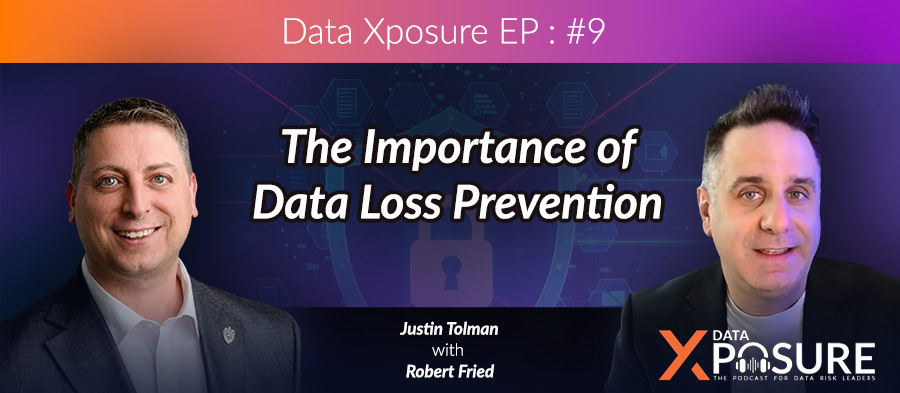
In our latest episode of the Data Xposure podcast, Beyond Breach: Why Data Loss Prevention Is Every Leader’s Problem, we sat down with digital forensics expert Robert Fried to discuss the evolving landscape of data loss prevention and corporate investigations. As we look ahead to 2026, the challenges of hybrid work, "Shadow AI," and massive data sprawl are forcing organizations to rethink their defensive strategies. The discussion included plenty of insights and is worth it’s own listen, but we’ve also summarized five key takeaways below.
Listen to the full episode here.
1. The Digital Fireman: Speed and Strategy in Crisis
When a company realizes its "secret sauce" or sensitive intellectual property has walked out the door, the initial response is often driven by intense emotion, particularly in smaller organizations. Robert Fried likens the role of an investigator during this phase to that of a "digital fireman"—you must arrive on the scene, assess the damage, and act quickly to contain the "fire" before the data is propagated further.
The focus during these first 48 hours should be on "rolling deliverables" rather than waiting for a final, polished report. By providing immediate insights into device attachments, file activity, and internet history, investigators enable legal teams to file for temporary restraining orders (TROs) that can prevent a departing employee from starting a new role or using stolen data. Crucially, this work must be balanced with business continuity, ensuring that the investigation doesn't paralyze the organization’s ability to serve its customers while the evidence is being secured.
2. Eliminating Data ROT to Reduce Investigation Friction
A recurring theme for future-ready organizations is the aggressive management of "data rot"—the redundant, obsolete, and trivial (ROT) information that clogs corporate systems. As Justin Tolman notes, the longer an organization goes without clearing out this "brush," the more fuel there is for a potential "fire," leading to higher risks and much larger bills when an investigative team has to sift through petabytes of data.
The goal for responsible organizations should be to move toward defensible deletion, where AI and automated rules help remove the human element of fear associated with "pushing the button" and deleting data. By making the "invisible visible" and surfacing risky, unnecessary data, companies can ensure that their investigators are only focusing on the information that truly matters. Ultimately, there is no value in making a process efficient for data that shouldn't exist in the first place.
3. Managing the Risks of Third-Party and Shadow AI
Modern investigations must now account for data that lives outside the traditional corporate perimeter. In 2025, it became clear that a company’s security is often only as strong as its weakest third-party partner, especially as software companies become more interdependent on major LLM providers to process their data pipelines.
This is further complicated by "Shadow AI," where employees use unsanctioned personal accounts to process company data because the tools are so approachable and affordable. To manage this, organizations must provide safe, work-sanctioned AI alternatives to curb data leakage. Good AI governance has now become "table stakes," requiring transparency and accountability to ensure that when a boundary is crossed, the organization has the visibility necessary to take action.
4. Identifying the Tactics of Creative Exfiltration
As the digital sphere evolves, so do the methods used by departing employees to exfiltrate data. Investigators are seeing increasingly creative tactics, such as exporting an entire corporate email database into a single, massive PDF file—essentially a new, stealthier type of PST export.
Robert Fried highlights the importance of physical tracking in these cases, such as identifying where a leader sat during a mass departure and searching for thumb drives or inter-office folders left behind on desks. Another significant red flag is the "pre-departure refresh," where an employee requests an IT update or computer refresh shortly before leaving. This tactic is often used to wipe recent activity logs and reinstall a clean OS, making it much harder to prove what occurred in the final weeks of their employment.
5. Maintaining Forensic Integrity in a "WebMD" Era
With the rise of AI-driven search models, many clients now approach investigators with a "WebMD" style of self-diagnosis, asking highly technical questions about master file tables or iNodes. While AI is a powerful tool, it often provides information without the wisdom or experience needed to validate it, sometimes leading clients down expensive rabbit holes based on hallucinations.
The true value of a forensic expert lies in their professional integrity and their ability to remain objective under pressure. This means avoiding cookie-cutter approaches and treating every case as a unique circumstance with specific strategic goals. At the end of the day, an investigator's work must be defensible; it must rely on industry-accepted tools and accredited training to ensure that the results can withstand the scrutiny of a judge or jury.
Want to hear the full story? This recap covers the high-level strategy, but there is no substitute for hearing the experts discuss these cases in their own words.
To hear Robert Fried's detailed account of a "mass departure" investigation and Justin Tolman’s advice on automating the "must-do" task of preservation, listen to the full Data Xposure Podcast here.