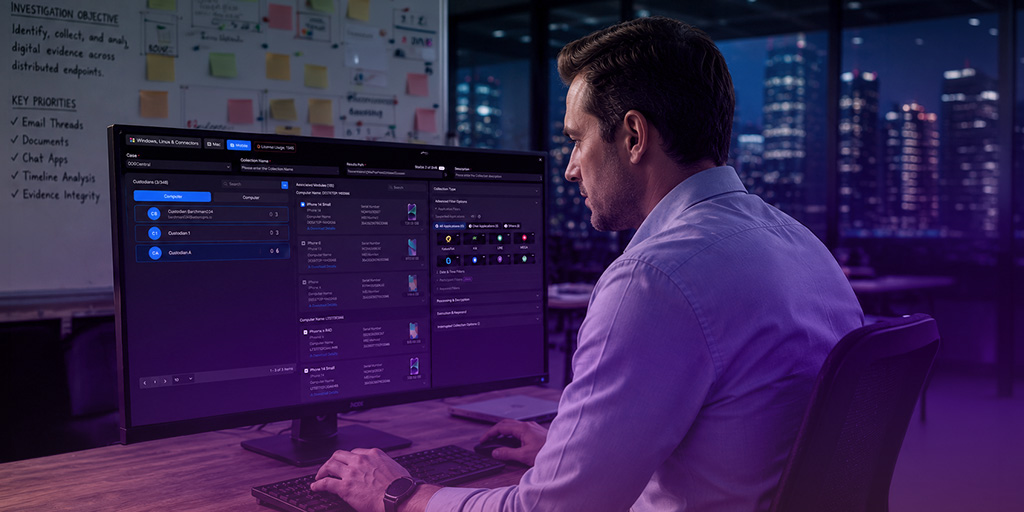
Securing the Invisible: How Remote Digital Forensics Is Redefining Investigation and Cybersecurity

Introduction to Advanced Remote Digital Forensics
In the digital age, our lives and businesses are deeply integrated with technology, increasing the risk of cyber threats. Digital forensics is vital for defending against cybercrime, requiring advanced tools that go beyond traditional methods. Remote digital forensics addresses challenges like cyber-physical systems, mobile technology growth, and expansive networks crossing borders.
Significant Factors Necessitating Remote Digital Forensics
Globalization of Digital Crime: Cyber threats impact global infrastructure remotely, outpacing traditional law enforcement. Advanced remote forensics are essential.
Expansion of Remote Work: COVID-19 increased telecommuting, expanding network vulnerabilities. Remote forensics enable quick, thorough investigations without physical presence.
Regulatory and Compliance Pressures: Rising cyberattacks have tightened data privacy and security regulations. Remote forensics help organizations comply through thorough investigations.
Technological Advancements: Rapid tech growth creates new data forms and investigative challenges. Advanced remote forensic tools are needed for integrating IoT and complex software.
Remote digital forensics provides advanced tools to tackle cyber challenges, utilizing AI, machine learning, and data analytics for proactive security. Evolving remote digital forensics will enhance resilience, protect information, and maintain infrastructure integrity.
The Evolution of Remote Digital Forensics
Digital forensics has transformed significantly due to rapid technological advances and complex cyber threats. Remote digital forensics now streamlines and enhances investigations with advanced technologies, redefining methodologies to confront and mitigate digital threats effectively.
Best-of-Breed Technologies in Digital Forensics
Best-of-breed technologies are essential for tackling complex cyber threats:
Data Recovery Tools: Crucial for retrieving data from various media, vital in legal disputes and cybercrime investigations.
Mobile Device Forensics: Extract data from mobile devices, providing critical insights into communications.
Network Forensics: Monitor and analyze network traffic in real-time to identify and mitigate threats.
Digital Imaging and Forensic Data Analysis: Verify the authenticity of documents and photos, essential in legal scenarios and fraud prevention.
Integrative Technologies and Processes
The effectiveness of remote digital forensics is enhanced by integrating tools into cohesive systems:
Centralized Data Repositories: Aggregate data from various sources for remote access and analysis.
Automated Workflows: Facilitate seamless data transfer between forensic tools, boosting efficiency.
Security and Compliance: Ensure operations meet high standards of data security and legal compliance.
Collaboration Tools: Enable effective teamwork across locations, handling complex, multi-jurisdictional cases.
This evolution highlights remote digital forensics' adaptability and critical role in modern cybersecurity. Enhanced tools ensure secure, resilient digital environments and empower professionals to pre-empt vulnerabilities.
The Impact of AI and Automation on Digital Forensics
AI and automation have transformed digital forensics, enhancing capabilities and efficiency. Advanced capabilities include:
Pattern Recognition: AI detects data patterns and anomalies, enabling early detection of fraudulent activities.
Data Sorting and Categorization: Automation tools organize vast datasets quickly, speeding up investigations.
Anomaly Detection: AI-driven systems continuously monitor networks, flagging atypical activities for prompt response.
Natural Language Processing (NLP) and Image Recognition: NLP analyzes textual data, while image recognition identifies fraudulent documents.
AI and automation shift forensics from reactive to proactive threat management, necessitating continuous innovation.
Zero Trust Architecture in Enhancing Forensic Security
Implementing Zero Trust architecture in digital forensics significantly enhances data and system security amid sophisticated cyber threats. Traditional perimeter-based defenses are inadequate, making the "never trust, always verify" principle crucial.
Core principles include:
Enforcement of Least Privilege: Limits access rights based on necessity, reducing internal threats.
Micro-segmentation: Divides networks into secure zones, containing breaches.
Multi-factor Authentication and Continuous Monitoring: Enhances verification and oversight, responding swiftly to anomalies.
Implementing Zero Trust in Digital Forensics
Advanced Security Technologies: Use behavioral analytics, AI-driven threat detection, and automated response systems.
Regular Policy Updates and User Training: Ongoing maintenance and training ensure robust security.
Holistic View and Continuous Assessment: Maintain full network visibility with continuous evaluation.
Enhancing Forensic Capabilities with Cloud-Based Tools
Transitioning to cloud-based forensic tools offers scalability, flexibility, and cross-geographic collaboration. Cloud platforms handle large-scale data storage and processing efficiently. Tools like FTK provide integrated solutions for managing investigations across multiple environments.
Synergizing Security by Integrating Cybersecurity and Forensic Tools
Integrating cybersecurity and forensic tools enables seamless data exchange and unified threat detection. Connecting SIEM systems, data sources, and response tools creates a cohesive security posture and streamlines investigations.
Elevating Expertise: The Evolving Skill Requirements in Digital Forensics
As tools evolve, professionals must develop expertise in cloud computing, AI, and cybersecurity alongside traditional forensic methods. Continuous learning is essential to keep pace with emerging threats.
Balancing the Scales: Costs vs Benefits
Advanced forensic tools require investment in setup, licensing, and maintenance. However, they deliver long-term value through improved efficiency, faster investigations, and higher accuracy. Organizations must evaluate ROI carefully.
The Future of Remote Digital Forensics
Remote digital forensics is poised for significant growth, driven by AI, machine learning, and cloud computing. These technologies enable faster, more precise, and globally accessible investigations, strengthening digital security.
Embracing integrated, proactive forensic systems is essential for protecting digital assets. Organizations must invest in advanced technologies to address modern cyber threats and ensure resilience.
Author's Bio
Harsh Behl is the Vice President of Product Management at Exterro, with extensive experience in product management and digital forensics. He has overseen the full lifecycle of forensic products and previously served as a Senior Digital Forensics Consultant at Credence Security.
Known for his expertise and leadership, Harsh plays a key role in advancing how AI is transforming digital forensics. His work continues to drive innovation and improve digital investigation practices.