From Spreadsheets to Culture: How to Build a Privacy Program That Actually Works
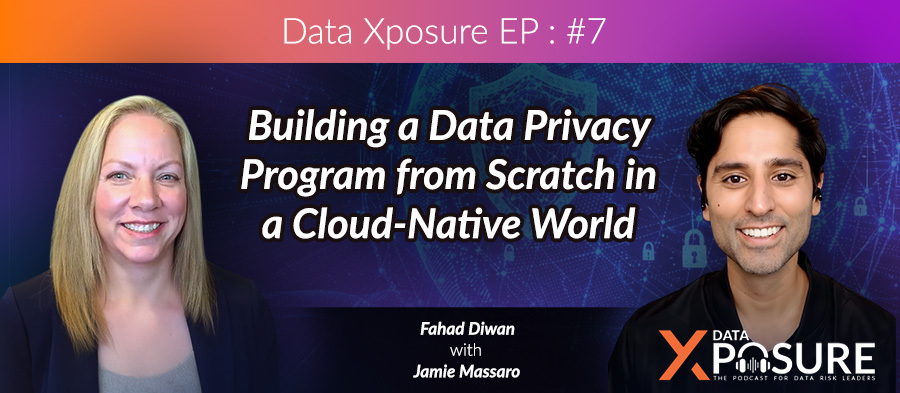
Building a privacy program from scratch is rarely glamorous. It’s not policy drafting, high-level strategy sessions, or sophisticated automation right out of the gate. More often, it looks exactly like what Spectro Cloud’s Jamie Massaro described on the most recent episode of Data Xposure: opening a spreadsheet and trying to map the chaos.
That’s the unspoken reality of modern privacy work — especially inside fast-moving, cloud-native organizations. You start with what you have, you build structure around it, and you fight the urge to skip ahead to tools before you understand the terrain. Jamie’s journey offers a roadmap that feels refreshingly honest: privacy programs grow best when they blend structure, culture, and timing, not when they chase complexity.
Listen to the full convesation between Jamie Massaro and Fahad Diwan here.
Start With What You Can See
When Jamie stepped into her role, Spectro Cloud didn’t yet have the formal privacy infrastructure you’d expect from a mature organization. What it did have was the same thing most teams start with: data everywhere, vendors everywhere, and no single place showing who touched what. So she started with an inventory — not of technology, but of truth. It wasn’t elegant or automated. It was just a spreadsheet--and for their needs at the time, it worked.
Her first problem wasn’t automation; it was visibility. In a cloud-native startup, third-party tools proliferate quickly, and vendor risk easily becomes organizational risk. One vendor breach is effectively your breach too — a truth she highlighted when describing why third-party review became her earliest priority.
The lesson is simple but essential: if you don’t know what systems you use, where the data goes, or which tools are business-critical, nothing else in your privacy program will scale. Mapping comes first, not because it’s glamorous, but because it’s foundational.
Culture Is the Force Multiplier
But structure only gets you so far. What separates successful privacy programs from perpetually reactive ones is culture — the everyday behaviors and shared mindset that make privacy feel like everyone’s job rather than one team’s burden. Jamie puts this into practice with an approach shaped by an unlikely influence: her years in retail. Working with frontline associates taught her that culture doesn’t start with executives or policies — it starts with the people closest to the workflows. And so at Spectro Cloud, instead of privacy being “a department that says no,” it became a conversation people actually wanted to participate in.
Her training style is deliberately unconventional: humor, memes, unexpected quiz answers, and content that feels approachable rather than punitive. And it works. Privacy became something people talked about, not something they avoided. Her Slack channels evolved from simple communication tools into active culture-building spaces where engineering, HR, sales, and compliance all surfaced questions early and often.
When employees volunteer questions, escalate concerns, or double-check workflows before shipping code or onboarding a vendor, it’s a sign of maturity no automation can replicate. The truth is: policies can mandate compliance, but only culture can sustain it.
Collaboration Stops Silos Before They Form
Another theme that emerged clearly in the conversation was the importance of cross-functional teaming. Spectro Cloud’s privacy function doesn’t operate on an island — it works alongside Security, Compliance, Engineering, HR, and outside counsel in tight, predictable rhythms.
She described bi-weekly check-ins with legal counsel and shared communication channels that foster transparency instead of bottlenecks. These weren’t just conveniences — they were governance structures. Decisions moved faster. Issues surfaced earlier. Accountability was shared rather than siloed.
Hybrid privacy programs don’t fail because the policies are wrong; they fail because the relationships are. When privacy becomes a shared conversation rather than a downstream approval step, organizations eliminate friction before it begins.
Automate When You’re Ready — Not Before
Even as Spectro Cloud matured, Jamie didn’t rush into automation. This is a point many teams get wrong: technology isn’t a shortcut; it’s an amplifier. Introduce automation too early and it multiplies confusion. Introduce it at the right moment and it multiplies clarity.
Once her governance structure and cultural foundation were solid, she began layering in automation — for vendor reviews, request intake, and other repeatable workflows. But she emphasized a principle that many teams overlook: automate repetition, not judgment. Automation should remove friction, not replace expertise.
Her scaling strategy mirrored a maturity model:
- Map the environment (spreadsheets).
- Build the culture (training and communication).
- Embed privacy in workflows (collaboration across teams).
- Automate where it helps (tooling after alignment).
This order matters. Skip ahead, and the program cracks under its own weight.
A Modern Privacy Program Is a Culture, Not a Checklist
The strongest thread running through Jamie’s story is this: privacy is not a compliance exercise — it’s a cultural one. Technology enables it, policies shape it, and governance sustains it, but it’s people who ultimately make it real. Her closing reflections made this especially clear. Privacy isn’t just about minimizing risk — it’s about enabling trust, strengthening product quality, and giving employees and customers confidence in how their data is handled. That kind of trust comes from everyday habits, not one-time audits.
Spectro Cloud didn’t scale its privacy program by adding more checkboxes. It did it by fostering a culture where people ask better questions, surface issues early, and see privacy as part of their responsibility — not an obstacle.
And that may be the most pragmatic lesson for any organization building a privacy function today:
If you want your privacy program to grow, start with clarity, build with culture, and scale with intention. Tools will help you go faster — but only after your people and processes know where they’re going.