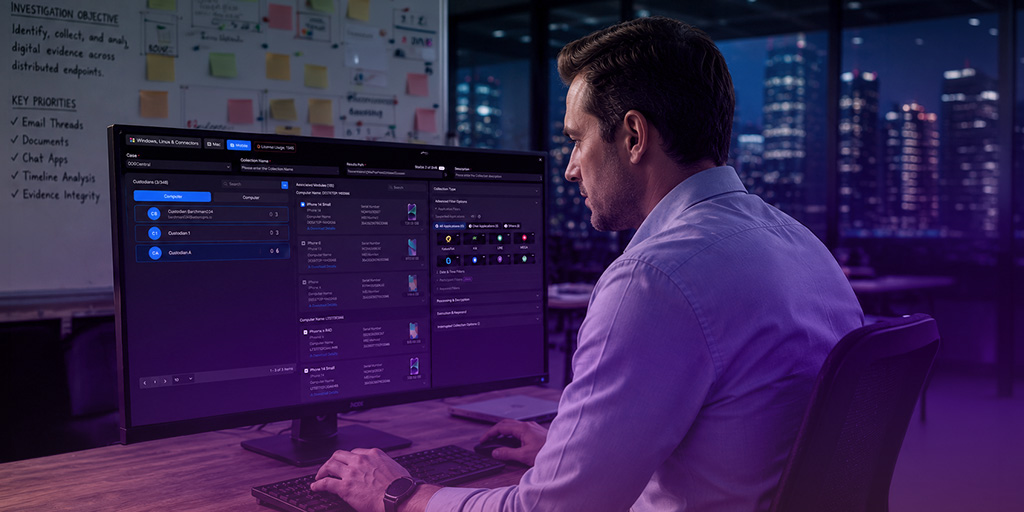
Implementing E-Discovery Technology the Easy Way

Organizations of a certain size—whether they are hitting $100 million or over $1 billion in annual revenue—eventually hit a "tech wall." As litigation becomes more frequent, companies typically start by purchasing a standalone legal hold solution.
However, as the workload increases, many find themselves trapped in a cycle of "software sprawl." They add a collection tool here and a review platform there, only to realize they've created a fragmented ecosystem that is difficult to manage. This is the primary challenge of bringing e-discovery in-house: the proliferation of disconnected technologies.
The Top 5 E-Discovery Software Challenges
In partnership with the Association of Corporate Counsel (ACC), Exterro surveyed 250 in-house professionals to identify the friction points in their legal tech stacks. The results highlight that disparate solutions make legal work confusing and tedious.
- Disconnected Software: A lack of integration forces users to learn multiple interfaces and manually transfer data from one tool to another, increasing the risk of human error and data spoliation.
- Poor User Experience: Much of the legacy software was built for IT experts, not legal professionals. If a tool requires advanced programming skills or manual data ingestion for review, it undermines the goal of efficiency.
- The Unified Platform Solution: These challenges are symptoms of a fragmented approach. An orchestrated e-discovery platform manages the process from start to finish in one secure environment, allowing teams to handle tasks like document review without leaving the system.
2026 Perspective: From "Unified" to "Agentic" Platforms
As we navigate 2026, the definition of a "unified platform" has evolved. It is no longer just about having all your tools in one place; it is about Agentic AI—AI that understands the entire EDRM lifecycle and acts as a proactive collaborator.
- Zero-Transfer Workflows: In 2026, the best platforms have eliminated "data transfer" entirely. Metadata and files stay in place while AI agents perform early case assessment and tagging. This solves the #1 challenge of fragmented software by removing the need for "connectors" altogether.
- Natural Language Interfaces: The "poor user experience" hurdle has been cleared by Generative AI. Legal teams now interact with their e-discovery platform using natural language (e.g., "Show me all communications between the CEO and the vendor regarding the contract breach in Q3"), removing the technical barrier for paralegals and attorneys.
Streamlining the Procurement Process
Exterro’s 2021 E-Discovery Technology Report for In-House Professionals suggests a path forward to avoid these technical pitfalls by improving how you buy software:
- Lean Procurement Teams: Keep your decision-making team to five people or fewer. Larger groups suffer from conflicting priorities and struggle to achieve consensus.
- Set a Strict Decision Timeline: 40% of organizations take over six months to buy software. In the fast-moving landscape of 2026, a six-month cycle means the technology might already be outdated by the time it's implemented. Aim for a 90-day window to ensure you get value faster.
Download the 2021 E-Discovery Technology Report for In-House Professionals today to see the full data set and learn how to optimize your in-house operations.
Are you finding that your team spends more time "managing the software" (moving files, fixing integrations) than actually reviewing evidence?