3 Key Capabilities You Need in Your Digital Forensics Technology
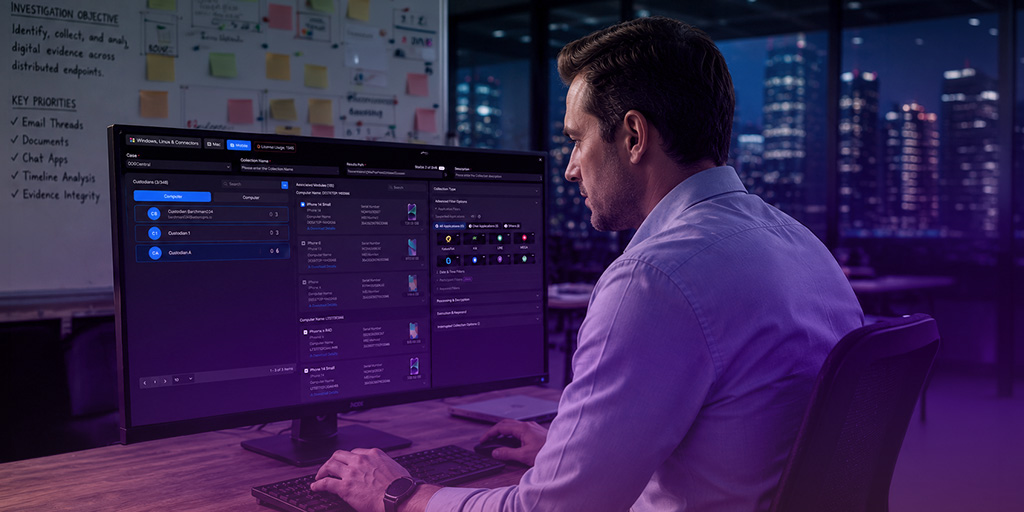
When considering the elements of digital forensics technology for corporate use, the requirements differ significantly from law enforcement. For enterprises, customization and flexibility are the true north.
A modern forensic toolkit must offer automation: if a specific threat is detected at an endpoint, the system should automatically trigger data collection, isolate the suspect device from the network to stop unauthorized data transmission, and initiate processing to determine the attack's origin. Had these capabilities been universal, major breaches like those recently impacting defense and energy sectors might have had far less damaging outcomes.
Criteria Number 1: Defensibility
Data defensibility is the critical handoff between IT investigators and legal teams. For digital evidence to hold value in court, teams must prove that the data collected at the start of an investigation is identical to the data presented at the end. If you cannot prove this, the evidence is inadmissible.
To ensure defensibility, your toolkit must:
- Establish a Chain of Custody: Show exactly who handled the data and when, proving no human error or malicious interference occurred.
- Use Cryptographic Hashing: Employ low-level imaging and "digital fingerprints" (hashes) to verify that not a single bit of data has been altered in transit.
Criteria Number 2: Scalability
In a global enterprise, you cannot manually manage threat vectors. Scalability means your toolset must be capable of analyzing thousands of potentially affected endpoints simultaneously. To be effective, the technology should allow for "single-click" analysis across the entire network infrastructure, regardless of where those endpoints are located.
Criteria Number 3: Accuracy
Accuracy is the foundation of confidence. When a breach occurs, IT professionals are working under extreme time pressure and cannot afford to chase "ghosts." When selecting a tool, choose one with a proven track record of minimal false positives. You need to be certain that the information you are looking at is the right information.
The 2026 Shift: Remote and Cloud-Native Forensics
As of April 2026, enterprise forensics has moved beyond the local network. With the workforce permanently decentralized, the three criteria above now extend into the cloud:
- Off-Network Collection: Modern tools like Exterro FTK® now allow for forensic-grade collection even when a device is not on the corporate VPN.
- Cloud-Silo Forensics: Investigations now routinely span across Slack, Teams, AWS, and Azure. Accuracy in 2026 means being able to reconstruct a "conversation" across multiple platforms to see the full scope of an insider threat or data exfiltration.
Learn all about the full picture on digital forensics for enterprises in the whitepaper.
Is your organization currently equipped to perform a full forensic collection on a remote employee's laptop without requiring them to ship the device back to the office?